The realm of media is evolving rapidly.
Staying informed with trusted news sources has become increasingly important for politically engaged individuals therefore.
Democrats and progressives seek out news outlets that not only report current events but also provide in-depth analysis, progressive perspectives, and comprehensive coverage of social and political issues.
This blog post explores five of the most popular liberal news websites that have become go-to sources for left-leaning readers seeking nuanced, fact-based reporting.
Take a look.
Check Out: Top Conservative News Websites
1. MS NOW

MS NOW continues to be a vital media home for left-leaning Americans.
Anchored by trusted talent like Rachel Maddow, Jen Psaki, Lawrence O’Donnell, Joe Scarborough, and Mika Brzezinski, the network delivers in-depth political analysis and progressive commentary that resonates deeply with its core audience.
Its leadership has reassured viewers that the same familiar and trusted hosts who make sense of what’s happening in Washington, across the country, and around the world will remain.
A direct-to-consumer streaming platform is also in the works, designed as “a digital hub for progressives,” centered around community, membership, and democracy – a bold digital evolution that could significantly expand MS NOW’s reach beyond traditional cable.
Not too long ago, Comcast spun off several cable assets including MSNBC, CNBC, USA Network, E!, and others, into a new independent entity called Versant.
As part of that spinoff, MSNBC rebranded as MS NOW, a backronym for “My Source for News, Opinion, and the World” — to remove the overt use of NBC’s trademarks, including the NBC peacock logo.
The rebranding officially took effect in November last year.
As on day, MS NOW is the seventh most popular channel on TV, watched by approximately 1,260,000 people during primetime, up 8% in the recent weeks.
Also Read: Best ZeroHedge Alternatives
2. Huff Post

Since its launch in 2005, The Huffington Post (now HuffPost) has been a cornerstone of liberal online media, offering a multifaceted approach to news and commentary.
Unlike traditional news outlets, HuffPost provides a diverse content ecosystem that spans politics, culture, entertainment, and social issues, creating a rich tapestry of progressive perspectives.
The website has distinguished itself by providing platforms for diverse voices, ensuring that multiple perspectives are represented in its reporting and opinion pieces.
By combining professional journalism with personal essays and opinion pieces, HuffPost offers readers a more holistic view of current events and social movements.
Its strong emphasis on social justice, environmental concerns, and grassroots movements resonates deeply with progressive readers who are looking for more than just traditional news reporting.
The platform has become particularly adept at capturing and amplifying emerging social and political discussions, making it a dynamic and engaging news source for Democrats and progressives.
Also Read: RumorMillNews.com Reviews, History, Alternatives
3. Daily Kos

Daily Kos represents a unique approach to political news and activism, blending professional journalism with community-driven content since 2002.
What sets this platform apart is its innovative model of combining expert reporting with user-generated content, creating a dynamic and interactive news experience.
The website is a digital hub for progressive activism, providing detailed election coverage, political strategy analysis, and robust community forums for meaningful political discussions.
Daily Kos has consistently emphasized grassroots political organizing, giving readers not just information, but also tools and platforms for active political engagement.
By supporting progressive candidates and policy initiatives and focusing on bottom-up political change, the website empowers its readers to be more than passive consumers of news.
Its commitment to democratic participation and community-driven discourse makes it a vital resource for politically engaged progressives seeking to understand and influence contemporary political landscapes.
Also Read: TheConservativeTreeHouse.com Alternatives, Reviews, History
4. Vox

Launched in 2014, Vox has revolutionized online journalism through its distinctive explanatory approach, catering to intellectually curious progressives who crave context and depth.
Rather than simply reporting news, Vox specializes in breaking down complex political and social issues into comprehensible, engaging narratives.
The website’s hallmark is its data-driven reporting, featuring rich infographics and detailed analyses that help readers understand the nuanced implications of current events.
Vox bridges the gap between traditional news reporting and in-depth educational content, offering balanced yet progressive perspectives on national and international news.
Its focus extends beyond immediate events, exploring emerging social trends, technological impacts, and the broader systemic challenges that shape our world.
By providing sophisticated, context-rich reporting, Vox has become particularly popular among younger, more technologically savvy progressive readers who demand more than superficial news coverage.
Also Read: Weaselzippers.us Alternatives, History, Reviews
5. Common Dreams
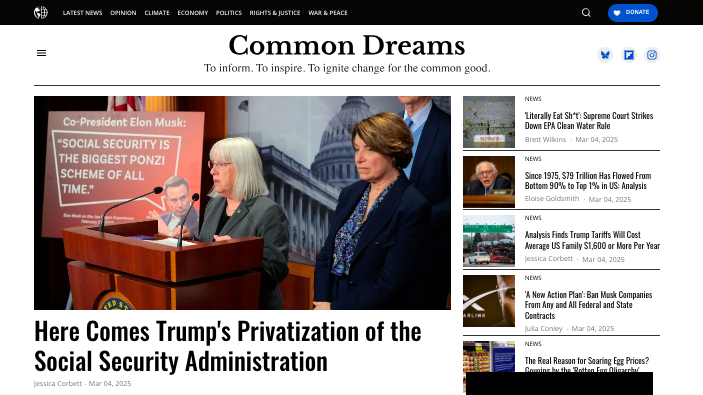
Common Dreams stands out as a non-profit news center committed to independent, non-corporate journalism that prioritizes social impact over commercial interests.
Since 1997, the website has been dedicated to providing comprehensive coverage of critical issues like climate change, economic inequality, and social justice, consistently amplifying voices that are often marginalized in mainstream media.
Unlike traditional news outlets, Common Dreams goes beyond reporting by actively supporting and highlighting grassroots movements and progressive activism.
The platform serves as a critical junction for republishing content from diverse progressive writers and journalists, creating a rich, collaborative information ecosystem.
Its unwavering focus on human rights, global social issues, and systemic change sets it apart from more commercial news sources.
By emphasizing collective action and providing in-depth analysis of progressive policy initiatives, Common Dreams offers readers not just information, but a vision for potential societal transformation.
6. The New York Times
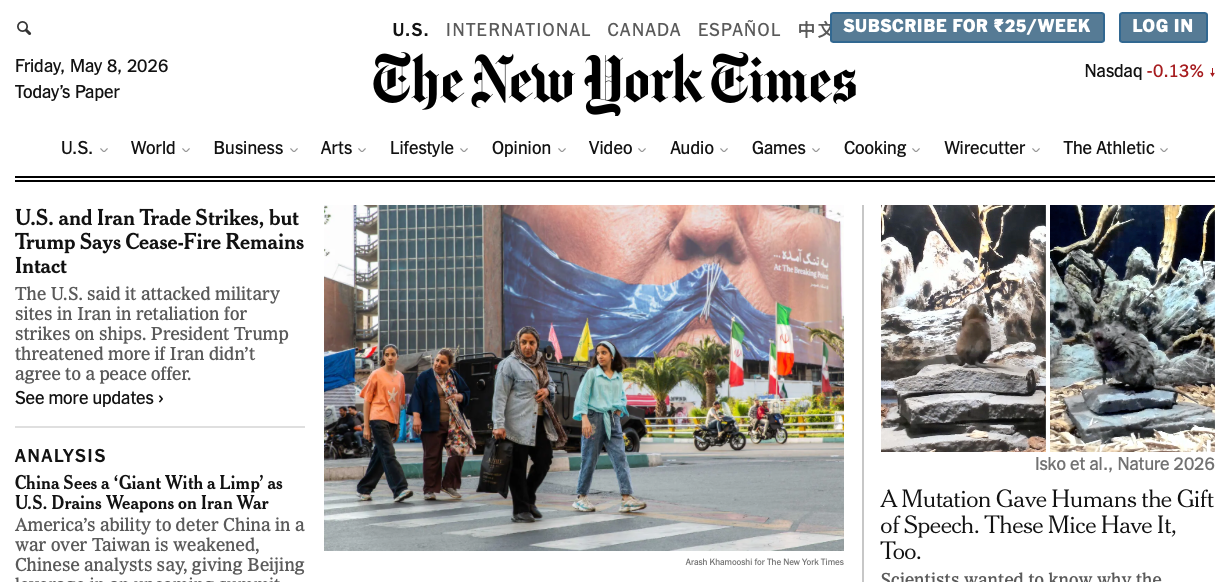
Founded in 1851, The New York Times is one of the most influential newspapers in the world.
Based in New York City, it has long been considered a go-to source for liberals and progressives, though it strives for journalistic objectivity.
The Times covers politics, culture, science, and international affairs with depth and rigor. It has won more Pulitzer Prizes than any other news organization.
Its opinion section features prominent progressive voices. While critics on the right often label it as biased toward the left, it remains a cornerstone of American journalism and democratic discourse.
7. The Washington Post
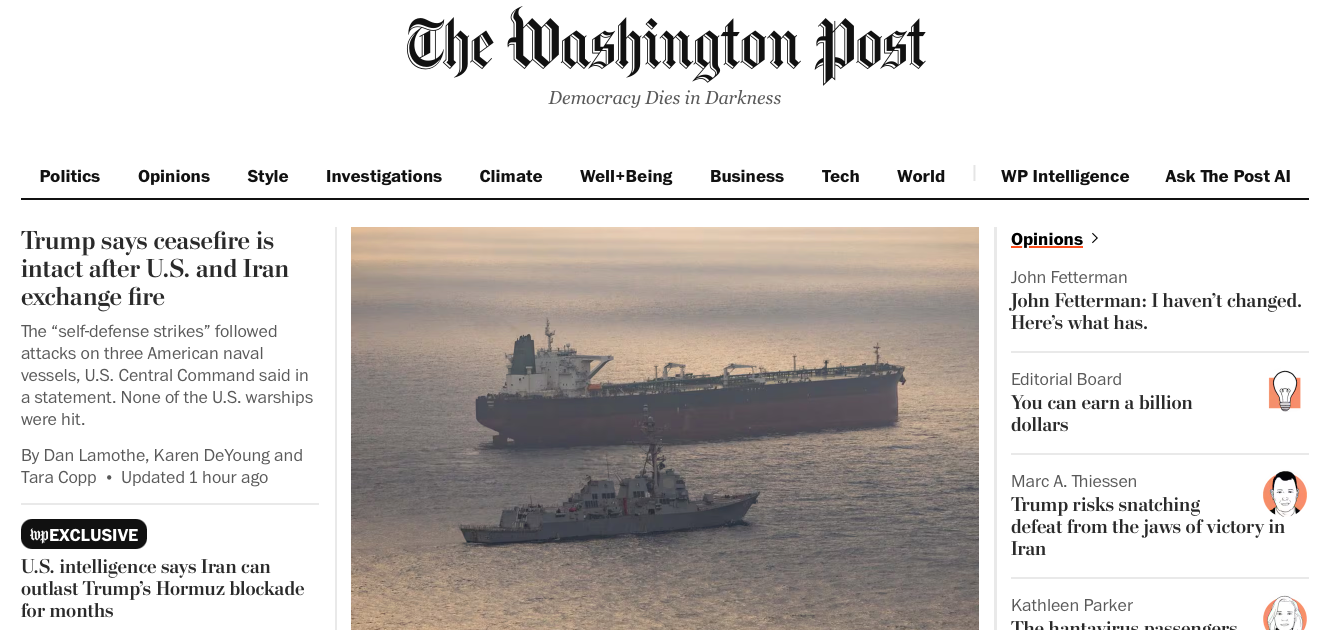
Established in 1877, The Washington Post is America’s premier political newspaper, based in the nation’s capital.
It gained legendary status after exposing the Watergate scandal in the 1970s. Purchased by Amazon founder Jeff Bezos in 2013, it underwent significant digital transformation.
Democrats and progressives frequently turn to the Post for its deep investigative reporting and political analysis. Its opinion section regularly features liberal commentators.
Though it aims for balanced reporting, conservatives often cite it as left-leaning. The Post’s proximity to Congress and the White House gives it unmatched access to political news and insider perspectives.
8. CNN
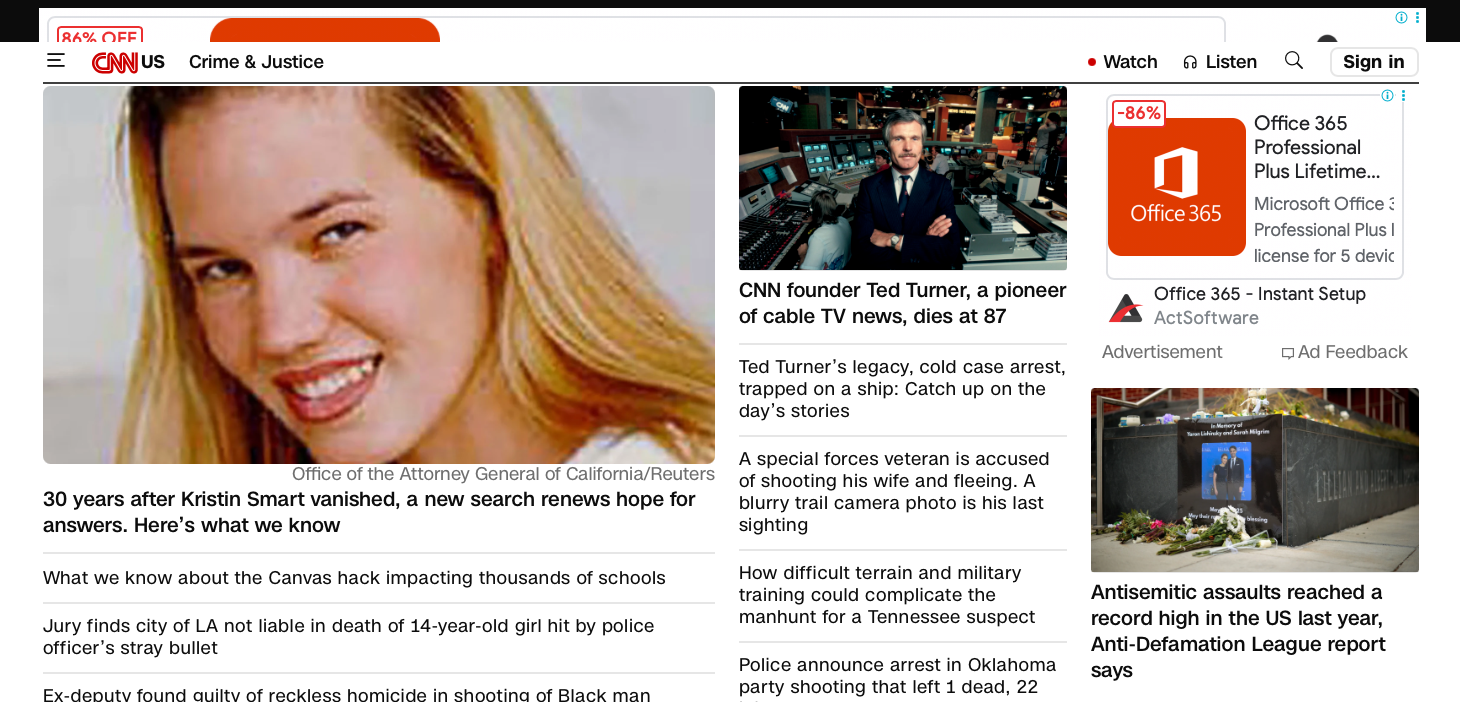
CNN, the Cable News Network, was founded by Ted Turner in 1980 and became the world’s first 24-hour news channel.
Based in Atlanta, Georgia, it revolutionized broadcast journalism. Over time, CNN developed a reputation as a center-left news outlet, making it popular among Democrats and progressives.
Its primetime lineup has featured outspoken critics of conservative politics, particularly during the Trump era.
CNN covers domestic and international news extensively. It has faced criticism from conservatives who label it as biased, while some on the left feel it is too centrist. Its digital presence continues to grow significantly.
9. Salon

Founded in 1995, Salon is one of the earliest and most enduring liberal online news magazines.
Based in San Francisco, it covers politics, culture, entertainment, and social issues from an unapologetically progressive perspective.
Salon was ahead of its time in embracing digital-only journalism and has maintained a loyal readership among left-leaning audiences.
It is known for sharp political commentary, cultural criticism, and opinion pieces that challenge conservative viewpoints.
Over the years, Salon has navigated significant financial challenges common to digital media. Despite struggles, it remains an important platform for progressive voices and political debate in America.
10. Slate
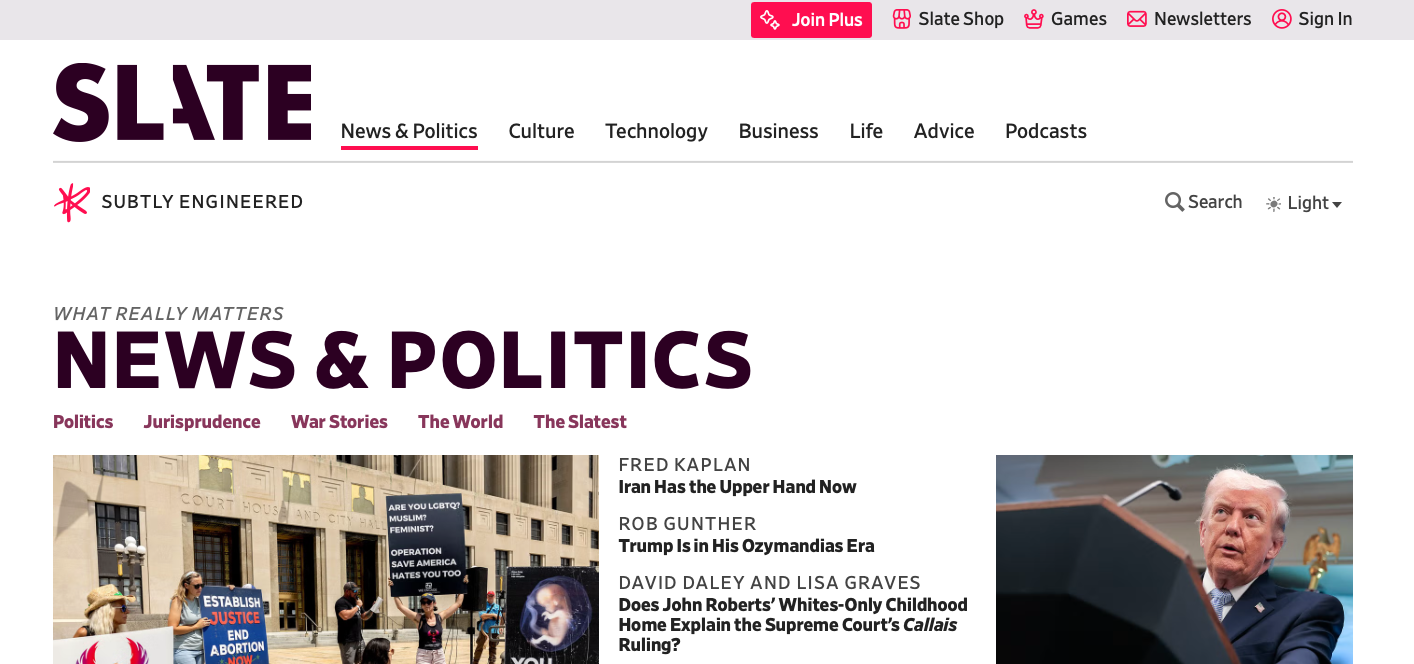
Launched in 1996 by Microsoft and later independently operated, Slate is a liberal-leaning online magazine known for its contrarian, intellectually engaging commentary.
Published from Washington D.C. and New York, Slate covers politics, technology, culture, law, and the arts.
It attracts a well-educated, progressive readership that appreciates its analytical approach to current events.
Slate’s political podcast, “Political Gabfest,” has cultivated a dedicated following. While it leans left, Slate often takes unconventional positions that challenge both conservative and liberal orthodoxies.
Its legal analysis section, Jurisprudence, is particularly well-regarded among those interested in constitutional and judicial matters.
11. Mother Jones
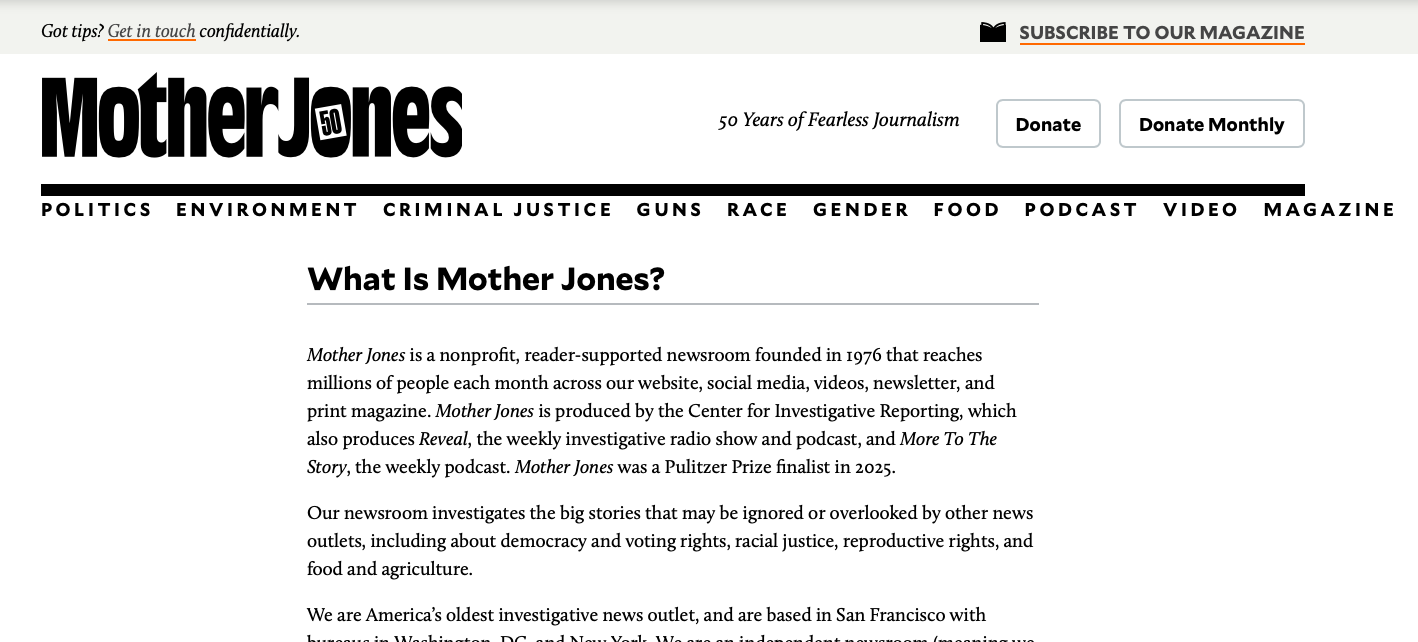
Mother Jones, founded in 1976 and named after labor activist Mary Harris “Mother” Jones, is a nonprofit investigative news organization based in San Francisco.
It is one of America’s most respected progressive publications, known for hard-hitting investigative journalism.
Mother Jones famously published the secretly recorded video of Mitt Romney’s “47 percent” remarks during the 2012 presidential campaign.
The magazine covers politics, environment, social justice, and corporate accountability with a clear left-wing editorial perspective.
Its nonprofit model allows it to pursue stories that commercial outlets might avoid. It is widely trusted among Democrats and progressive activists.
12. The Nation
The Nation, founded in 1865, is the oldest continuously published weekly magazine in the United States.
It has a proud tradition of progressive and left-wing journalism, covering civil rights, labor rights, anti-war movements, and social justice throughout American history.
Based in New York City, The Nation features commentary from prominent progressive intellectuals, activists, and politicians.
It has been a consistent critic of corporate power, military intervention, and economic inequality.
The magazine supported Bernie Sanders’ presidential campaigns enthusiastically. Though its circulation is relatively modest, its influence on progressive thought and political discourse far exceeds its readership numbers.
13. Jacobin
Jacobin is a leading socialist magazine founded in 2010 by Bhaskar Sunkara. Published quarterly in print with a robust online presence, Jacobin represents the more radical, left flank of progressive American media.
It advocates for democratic socialism, workers’ rights, universal healthcare, and economic redistribution.
Jacobin gained significant visibility during Bernie Sanders’ presidential campaigns, serving as an intellectual home for his movement. It is widely read among young leftists, academics, and labor organizers.
Unlike mainstream liberal outlets, Jacobin openly critiques the centrist wing of the Democratic Party. Its circulation has grown remarkably, making it one of the most influential left publications today.
14. The Intercept

The Intercept was founded in 2014 by journalists Glenn Greenwald, Laura Poitras, and Jeremy Scahill, primarily to report on documents leaked by Edward Snowden.
Funded by eBay founder Pierre Omidyar, it quickly established itself as a fearless investigative outlet.
The Intercept covers national security, civil liberties, surveillance, and government accountability from a distinctly left-wing perspective.
It is unafraid to criticize both Republican and Democratic establishments. Glenn Greenwald later departed amid editorial disputes.
Despite internal controversies, The Intercept remains an important platform for investigative journalism that challenges government power and corporate influence, attracting a dedicated progressive readership globally.
15. Truthout

Truthout is a nonprofit, reader-supported progressive news organization founded in 2001.
It focuses on underreported stories related to social justice, economic inequality, environmental issues, criminal justice reform, and human rights.
Truthout publishes original investigative reporting alongside commentary from progressive scholars and activists. Its explicit mission is to promote a more just and democratic society, making no pretense of political neutrality.
The outlet has been particularly vocal on issues like mass incarceration, climate justice, and corporate power.
Financially sustained through reader donations, Truthout operates independently of corporate advertising pressure, which supporters argue allows for more honest progressive journalism.
16. Alternet
AlterNet was founded in 1998 as a progressive news and opinion website designed to counter what its founders saw as a conservative-dominated media landscape.
It aggregates and publishes content covering politics, environment, civil rights, drug policy, and social justice.
AlterNet has been an important hub for progressive activism and reporting, particularly on issues ignored by mainstream media. It became especially influential in the early 2000s anti-war movement.
Over the years, AlterNet has faced financial difficulties and reduced its operations significantly.
Nevertheless, it remains a recognizable name in progressive media and continues to publish content relevant to left-leaning audiences.
17. Raw Story
Raw Story is a progressive American news website founded in 2004.
It primarily aggregates and reports on political news with a left-leaning perspective, focusing heavily on accountability journalism targeting conservative politicians and organizations.
Raw Story gained significant traffic during the Bush and Trump administrations by providing sharp, critical coverage of Republican policies and controversies.
It is known for breaking stories on right-wing extremism, voter suppression, and political corruption.
Raw Story’s straightforward, politically direct approach has made it popular among partisan Democratic readers who want news filtered through a progressive lens without the pretense of strict neutrality seen in mainstream outlets.
18. Media Matters for America

Media Matters for America is a nonprofit progressive media watchdog organization founded by David Brock in 2004.
Rather than being a traditional news outlet, it monitors, analyzes, and corrects what it identifies as conservative misinformation in the American media, with particular focus on Fox News.
Media Matters publishes detailed research reports, transcripts, and analyses documenting what it considers misleading or false conservative media narratives.
It has been influential in shaping Democratic messaging and media strategy. Conservatives strongly criticize Media Matters as a partisan attack organization.
Regardless, it remains a highly utilized resource among progressive journalists, activists, and Democratic Party operatives.
19. The American Prospect
The American Prospect is a progressive policy and political magazine founded in 1990 by Robert Kuttner, Paul Starr, and Robert Reich.
Based in Washington D.C., it focuses on policy analysis, economic issues, and political strategy from a center-left to progressive perspective.
The magazine is particularly influential among Democratic policy professionals, academics, and wonks who want substantive, evidence-based discussions of governance.
It covers healthcare, labor, housing, finance, and democratic reform in considerable depth. The American Prospect is less ideologically radical than outlets like Jacobin but more explicitly progressive than mainstream news organizations.
Robert Kuttner remains a prominent voice in its editorial direction.
20. In These Times
In These Times is an independent, nonprofit progressive magazine founded in 1976.
Published in Chicago, it covers labor, politics, social movements, and economic justice from a democratic socialist perspective.
The magazine has deep roots in the American labor movement and maintains close connections to union organizing efforts nationwide.
In These Times is particularly valued by working-class progressives and labor activists.
It was an early supporter of Bernie Sanders and has consistently advocated for policies like Medicare for All, a Green New Deal, and expanded workers’ rights.
Despite modest circulation, its influence on labor-focused progressive politics remains considerable and respected.
21. Truthdig
Truthdig is a progressive online news and commentary outlet founded in 2005 by Robert Scheer, a veteran journalist.
It features longform investigative journalism and opinion from prominent progressive intellectuals, including Chris Hedges, whose columns are among the site’s most popular.
Truthdig covers war, corporate power, civil liberties, and economic injustice with depth and moral urgency.
Internal disputes between staff and management over editorial independence led to a dramatic collapse in 2020, when most of the editorial team resigned en masse.
However, the platform was relaunched in 2022, and continues to operate as an independent progressive journal of news and opinions till this day.
22. Democracy Now!

Democracy Now! is an independent, nonprofit progressive news program founded in 1996 by journalist Amy Goodman.
Broadcasting daily on radio, television, and online, it reaches millions of viewers and listeners worldwide.
Democracy Now! covers stories often ignored by corporate media, including anti-war activism, indigenous rights, environmental justice, and global human rights abuses.
Amy Goodman’s passionate, advocacy-driven journalism has made the program an institution of the American left.
The show is funded entirely through listener and viewer donations and grants, insulating it from corporate influence.
It is particularly popular among grassroots activists, academics, and progressive communities who distrust mainstream media coverage.
23. New Republic
The New Republic is one of America’s oldest political magazines, founded in 1914.
For most of its history, it occupied a centrist-liberal position, attracting intellectuals, policy thinkers, and political insiders. Under various ownership changes, its editorial direction shifted.
In recent years, under the ownership of Win McCormack, it has moved toward a more explicitly progressive stance, covering politics, culture, and policy with renewed ideological clarity.
The New Republic has been particularly vocal on issues of inequality, democratic backsliding, and climate change.
Its rich intellectual history and recently reinvigorated progressive voice make it an important publication for serious left-leaning readers and thinkers.
24. The Atlantic
The Atlantic was founded in Boston in 1857 and is one of America’s most prestigious and intellectually distinguished magazines.
It covers politics, culture, technology, science, and global affairs with depth and literary ambition.
While historically nonpartisan, The Atlantic has become notably critical of right-wing populism and Trumpism, making it increasingly popular among educated liberals and progressives.
Under editor Jeffrey Goldberg, it has published landmark political journalism. The Atlantic’s long-form essays, reported features, and commentary attract a sophisticated, center-left readership.
It has successfully navigated the digital transition and grown significantly, including launching The Atlantic Daily newsletter and expanding its podcast offerings.
25. Politico
Politico was founded in 2007 and quickly became the most influential political news outlet in Washington D.C.
While not explicitly partisan, Politico’s exhaustive, insider-focused political coverage is widely consumed by Democrats, progressive operatives, and policy professionals.
Its “Playbook” newsletter is required reading in Democratic political circles. Politico Pro offers in-depth policy coverage for a premium subscriber base of lobbyists, government officials, and advocates.
Politico was acquired by German publisher Axel Springer in 2021.
Though it aims for political neutrality, its detailed coverage of Democratic Party strategy, legislation, and elections makes it indispensable to progressive political professionals and engaged liberal news consumers.
Conclusion
These websites represent more than just news sources. They are platforms for progressive thought, social analysis, and political engagement.
While each offers a unique approach to reporting and commentary, they share a commitment to in-depth, context-rich journalism that goes beyond surface-level news coverage.
For Democrats and progressives seeking to stay informed, these websites provide not just information, but also analysis, perspective, and inspiration.
They reflect the complexity of modern political discourse and offer readers tools to understand and engage with the most pressing issues of our time.
Also Read: Gateway Pundit Review
Enjoyed the post?