
While Kahoot has long been a favorite among educators for creating quick quizzes and games, the educational technology has expanded dramatically with numerous alternatives that offer unique features and capabilities.
Regardless of whether you’re looking to diversify your teaching toolkit, need more advanced analytics, or simply want to try something new to keep your students excited about learning, these Kahoot alternatives provide excellent options.
Each platform brings its own special twist to game-based learning, catering to different subjects, age groups, and teaching styles.
Let’s explore these powerful tools to learn more about what they offer.
1. Quizizz

Quizizz is a student-paced formative assessment tool that allows teachers to create interactive quizzes with customizable options. Students can complete activities at their own pace while teachers monitor progress in real-time. The platform incorporates memes, avatars, and game elements that make learning engaging while providing valuable data insights.
Key Benefits
- Student-paced gameplay
- Built-in question bank
- Customizable memes & avatars
- Math equation support
- Leaderboards and power-ups
What’s Great
- Works well for asynchronous learning
- Excellent homework mode with deadlines
- Detailed performance reports
- Integrates with Google Classroom
- Allows question randomization
What Can Improve
- Limited question types vs. alternatives
- Some students may rush through questions
- Free version has ads
- UI may feel cluttered for younger students
- Limited appearance customization
2. Blooket

Blooket reimagines educational gaming by combining quiz questions with engaging game modes like Tower Defense, Battle Royale, and Gold Quest. Students answer questions to progress in their chosen game format, adding an extra layer of fun to the review process. The platform allows teachers to use existing question sets or create their own.
Key Benefits
- Multiple unique game modes
- Host or assign as homework
- Question set marketplace
- Randomized questions
- Student progress tracking
What’s Great
- Highly engaging gameplay mechanics
- Students love the variety of games
- Encourages healthy competition
- Works well for review sessions
- Reduces assessment anxiety
What Can Improve
- Limited question customization options
- Premium features require subscription
- More time-consuming than simpler quizzes
- Learning curve for all game modes
- Game aspects may distract from content
3. Gimkit

Gimkit is a game-based learning platform where students earn virtual currency to upgrade their character while answering questions. Teachers can create custom “kits” or use existing ones, with students competing individually or in teams across various game modes. The platform emphasizes repetition of concepts through its reward-based gameplay.
Key Benefits
- In-game economy system
- Multiple game modes
- Team play options
- Custom themes and characters
- Question creation and importing
What’s Great
- High engagement through progression
- Encourages content repetition
- Students can practice independently
- Real-time progress monitoring
- Integrates with Google Classroom
What Can Improve
- Can be costly for premium features
- More complex to set up than simpler tools
- Some game modes take longer to complete
- Younger students may find interface complex
- Limited question types (mostly multiple choice)
4. Baamboozle

Baamboozle is a colorful, team-based learning game platform with a simple interface that works well for whole-class activities. Teachers can create games with hidden points, images, and questions, or choose from thousands of ready-made games across various subjects. The platform is particularly effective for younger learners.
Key Benefits
- Team-based gameplay
- Image-rich content
- Hidden points and bonus rounds
- Thousands of ready-made games
- Play as class or remotely
What’s Great
- Very intuitive and easy to use
- Works well for elementary students
- No student accounts needed
- Completely free basic version
- Quick to set up and implement
What Can Improve
- Limited question formats
- Fewer game modes than competitors
- Limited data analytics
- Less suitable for individual assessment
- No student progress tracking over time
5. Brightful

Brightful offers a collection of virtual games and activities designed to boost engagement and interaction in both virtual and physical classrooms. Going beyond simple quizzes, it includes icebreakers, team building exercises, and educational games that can be facilitated by teachers. The platform excels in creating social learning environments.
Key Benefits
- Virtual meeting games
- Team building activities
- Icebreakers and energizers
- Timer and scoring system
- No preparation required
What’s Great
- Great for building classroom community
- No student accounts required
- Works well for remote learning
- Improves class participation
- Encourages communication skills
What Can Improve
- Fewer traditional assessment options
- Limited content creation features
- Not focused on curriculum content delivery
- Less suitable for graded assessments
- Fewer subject-specific resources
6. Mentimeter

Mentimeter is an interactive presentation platform that allows teachers to collect real-time input from students through various question types, polls, and word clouds. The platform integrates beautifully with slides to create dynamic presentations that adapt to student responses. Results are displayed visually for immediate class discussion.
Key Benefits
- Interactive slides and polls
- Real-time word clouds
- Multiple question formats
- Quiz competition mode
- Export and share results
What’s Great
- Beautiful visual presentation of data
- Excellent for discussions and reflection
- Anonymous participation option
- Works seamlessly across devices
- No student accounts needed
What Can Improve
- Limited gamification elements
- Free plan limits questions per presentation
- Not primarily designed for assessment
- Less engaging for younger students
- Limited LMS integration
7. Wordwall

Wordwall allows teachers to create both interactive digital activities and printable worksheets from the same content. With over 18 game templates including matching pairs, random wheels, and labeling games, teachers can quickly switch between different activity types. The platform is especially strong for language arts and vocabulary practice.
Key Benefits
- 18+ game templates
- Customizable themes
- Printable worksheets
- Community content library
- Leaderboards and timers
What’s Great
- Switch between digital and printable
- Easy to repurpose content
- Excellent for vocabulary and terms
- Works well on interactive whiteboards
- Simple interface for teachers and students
What Can Improve
- Limited data analytics
- Some templates better suited than others
- Free account limits number of resources
- Less suitable for complex concepts
- Limited integration capabilities
8. Genially

Genially is an all-in-one platform for creating interactive content including presentations, infographics, quizzes, and games. With its emphasis on visual design and interactivity, teachers can create engaging learning experiences with animated elements, tooltips, and embedded media. The platform excels in creating visually appealing educational content.
Key Benefits
- Interactive presentations
- Gamification templates
- Animation and interactive elements
- Data visualization options
- Collaborative creation
What’s Great
- Highly visual and engaging content
- Professional-looking designs
- Versatile across subjects and ages
- Reusable templates
- Embeddable in other platforms
What Can Improve
- Steeper learning curve than simpler tools
- Full features require paid subscription
- Content can be time-consuming to create
- Limited assessment capabilities
- Fewer built-in game mechanics
9. Quizalize

Quizalize combines competitive quiz games with sophisticated learning analytics and personalized follow-up activities. Teachers can easily identify which students are struggling with specific concepts and automatically assign differentiated content. The platform is particularly strong for mastery-based learning and differentiated instruction.
Key Benefits
- Mastery dashboards
- Automatic differentiation
- Team competitions
- Curriculum-aligned content
- Self-marking assignments
What’s Great
- Excellent for identifying learning gaps
- Integrates well with Google Classroom
- Detailed student performance data
- Follow-up resources for struggling students
- Works for homework or in-class
What Can Improve
- Game elements simpler than some alternatives
- Limited free version
- Fewer game modes than competitors
- Interface less appealing to younger students
- Requires student accounts for full functionality
10. AhaSlides

AhaSlides specializes in interactive presentations with built-in polls, quizzes, word clouds, and Q&A features. Perfect for engaging large groups, it allows teachers to seamlessly integrate questions and activities into lecture slides. The platform supports both synchronous and asynchronous participation.
Key Benefits
- Live polling and surveys
- Interactive presentations
- Word clouds and Q&A
- Quiz competitions
- Brainstorming activities
What’s Great
- Works well for large classes
- Exports results as spreadsheets
- No student accounts needed
- Simple for students to join
- Good for collecting student opinions
What Can Improve
- Limited gamification features
- Free plan has participant limitations
- Less curriculum-focused than alternatives
- Limited assessment question types
- Fewer ready-made educational templates
11. Quizlet

Quizlet focuses on study sets that can be transformed into various learning activities including flashcards, tests, and games. With its emphasis on vocabulary and fact mastery, the platform offers excellent study tools alongside competitive team games like Quizlet Live. The platform’s strength lies in its versatility as both a study and assessment tool.
Key Benefits
- Digital flashcards
- Quizlet Live team game
- Various study modes
- Text-to-speech functionality
- Progress tracking
What’s Great
- Excellent for vocabulary and terminology
- Students can study independently
- Huge library of existing content
- Works across all devices
- Great for language learning
What Can Improve
- Limited for conceptual understanding
- Most games focus on term-definition matching
- Free version shows ads to students
- Limited question types
- Less suitable for complex problem-solving
12. Poll Everywhere

Poll Everywhere transforms one-way presentations into interactive experiences with live polling, Q&A sessions, and word clouds. Designed for seamless integration with PowerPoint, Keynote, and Google Slides, it allows teachers to embed interactive elements directly into their lecture slides. The platform excels in collecting and displaying student responses.
Key Benefits
- Live audience polling
- Text message response option
- Moderated Q&A
- Word clouds and clickable images
- Survey and form creation
What’s Great
- Integrates with presentation software
- Works well for discussions
- Excellent for open-ended responses
- Anonymous participation option
- Exports data for analysis
What Can Improve
- Limited gamification elements
- Free plan has participant limitations
- Less suitable for formal assessment
- Limited curriculum-aligned content
- Fewer game mechanics than competitors
13. Nearpod

Nearpod is a comprehensive teaching platform that combines interactive slides, formative assessments, and immersive learning experiences like VR field trips. Teachers can deliver synchronous lessons or assign student-paced activities with embedded quizzes, polls, and multimedia elements. The platform offers strong integration with curriculum and standards.
Key Benefits
- Interactive presentations
- Virtual reality field trips
- Formative assessments
- Digital citizenship activities
- Student drawings and responses
What’s Great
- Comprehensive all-in-one teaching tool
- Strong curriculum integration
- Works for synchronous or asynchronous
- Excellent content library
- Detailed post-session reports
What Can Improve
- More complex than single-purpose tools
- Full features require paid subscription
- Resource-intensive on older devices
- Requires more setup time
- Less focused on competition than game-based tools
14. iClicker

iClicker combines physical response devices and cloud-based software for classroom polling, attendance, and assessment. Originally known for physical “clicker” devices, the platform now offers a robust mobile app for student responses alongside the traditional hardware option. The system is particularly popular in higher education settings.
Key Benefits
- Physical and mobile response options
- Attendance tracking
- LMS integration
- Anonymous polling
- Scheduled assessments
What’s Great
- Reliable for large classrooms
- Works without internet (physical clickers)
- Widely used in higher education
- Reduces phone distractions with focused app
- Minimal setup for instructors
What Can Improve
- Less gamified than alternatives
- More expensive due to hardware option
- Limited question types
- Less visually engaging for younger students
- Limited content creation features
15. QuizWhizzer
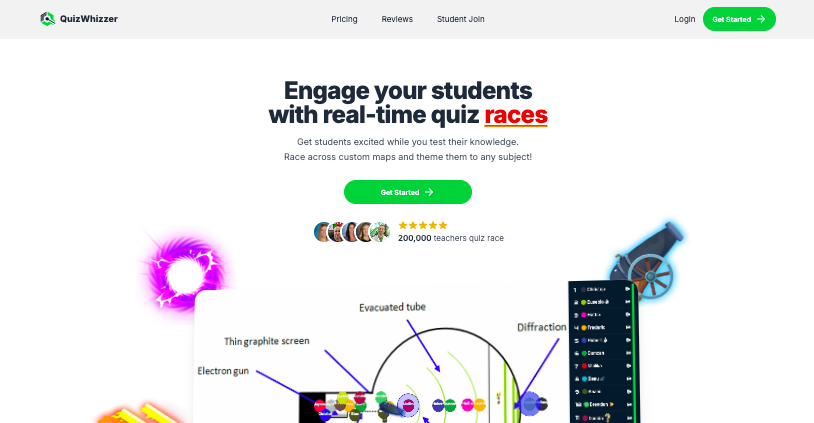
QuizWhizzer is a gamified quiz platform that transforms traditional assessments into engaging race-style competitions. Teachers can create interactive quiz races where students’ avatars advance on a visual game board as they answer questions correctly. The platform emphasizes self-paced learning, allowing students to work individually at their own pace while incorporating competitive elements that motivate participation.
Key Benefits
- Race-style gameplay with avatar progression
- Supports up to 100 players
- Self-paced learning approach
- Unique powerups and visual effects
- Visual progress tracking on game board
What’s Great
- Creates friendly, motivating competition
- Works for classroom and remote learning
- Supports individual and collaborative environments
- Easy quiz creation and customization
- Progress tracking and performance analysis
What Can Improve
- Less research on effectiveness vs. established platforms
- Smaller user community than major competitors
- May need more setup time for race customization
- Newer platform with potentially fewer integrations
- Race format may not suit all learning styles
16. ClassPoint
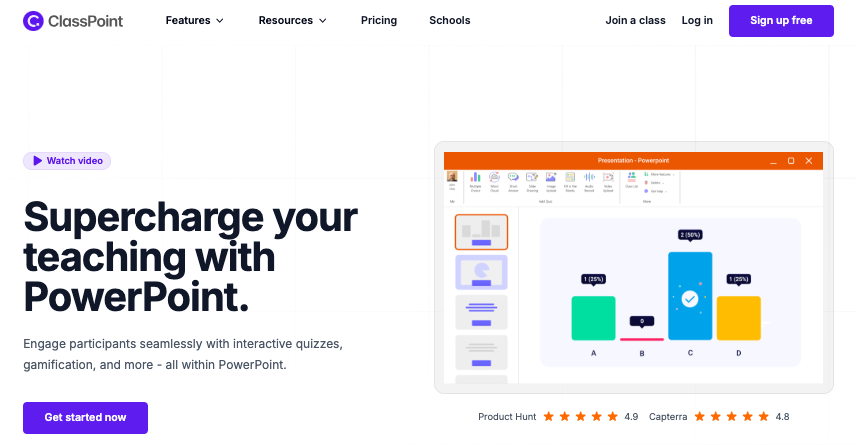
An integrated PowerPoint add-in, ClassPoint transforms traditional presentations into interactive teaching experiences. Educators can add polls, quizzes, and interactive elements directly within PowerPoint slides without switching applications. ClassPoint includes annotation tools, name pickers, timers, and gamification features that enhance student engagement while maintaining the familiar PowerPoint interface.
Key Benefits
- Seamless PowerPoint integration
- Multiple interactive question types
- Real-time student responses
- AI-powered quiz generation
- Competition mode for engagement
What’s Great
- No need to switch between applications
- Built-in annotation and whiteboard tools
- Gamification with star rewards system
- Name picker and timer features
- Works offline and online
What Can Improve
- Requires PowerPoint software
- Learning curve for advanced features
- Limited mobile app functionality
- Free version has usage limitations
- May slow down older computers
17. Wooclap
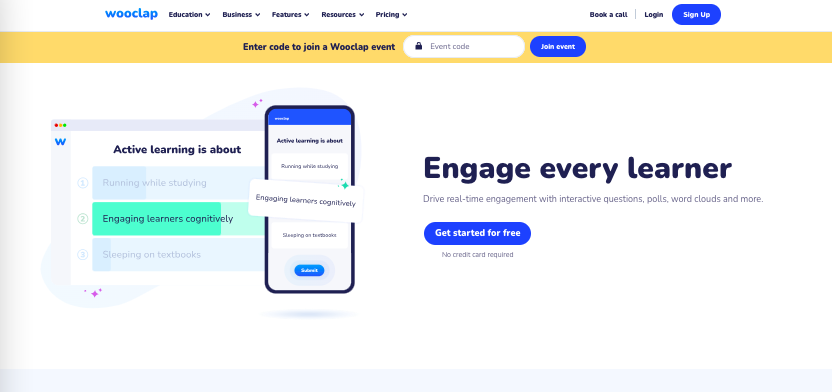
Wooclap is another interactive presentation platform that enables live polling, quizzes, and audience engagement activities. Instructors can create dynamic presentations with real-time feedback collection, supporting various question types including polls, word clouds, and brainstorming sessions. It integrates with PowerPoint and offers both web-based and mobile access for participants.
Key Benefits
- Multiple interactive question formats
- Real-time response visualization
- Brainstorming and word cloud features
- Image recognition capabilities
- AI-powered question generation
What’s Great
- Quick setup with QR code access
- PowerPoint integration available
- Strong analytics and reporting
- Multilingual support
- Effective for large audiences
What Can Improve
- Can be expensive for large institutions
- Limited customization options
- Requires internet connection
- Free version has participant limits
- Some advanced features need training
18. Crowdpurr
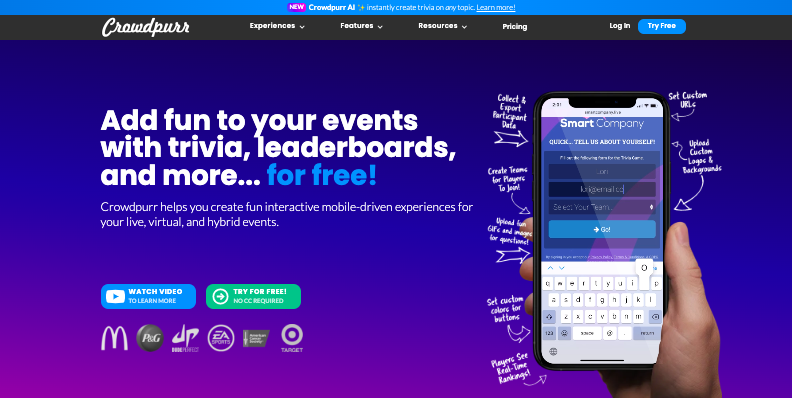
Crowdpurr is a game show-style audience engagement platform that transforms presentations into interactive competitions. The tool specializes in creating trivia games, polls, and interactive experiences that can accommodate large audiences. It’s particularly popular for corporate events, training sessions, and educational entertainment.
Key Benefits
- Game show-style interface
- Real-time leaderboards
- Multiple game formats
- Customizable branding
- Large audience capacity
What’s Great
- Excellent for large audience engagement
- Easy setup and participant joining
- Strong visual appeal and entertainment value
- Works well for corporate events
- Engaging competitive elements
What Can Improve
- May be too game-focused for serious content
- Limited educational assessment features
- Requires internet connection
- Less suitable for detailed feedback
- Limited LMS integration
19. Plickers
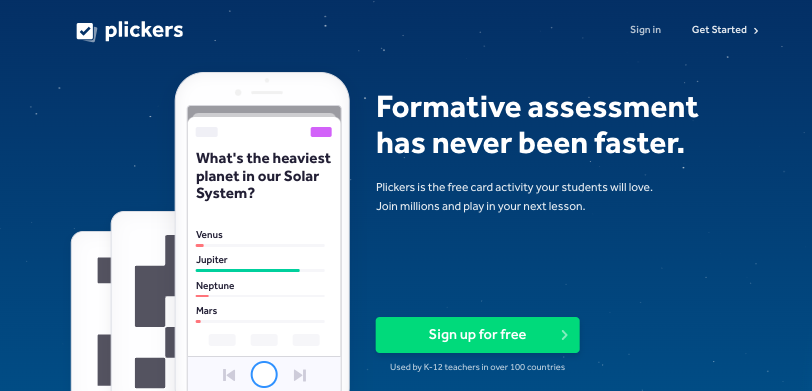
Plickers is a great tool, known for its audience response system that uses printed cards with QR-like codes for student responses. Students hold up cards to answer questions, and teachers scan the room with a mobile device to instantly collect all responses. This tool is particularly valuable in classrooms where students don’t have individual devices.
Key Benefits
- No student devices required
- Instant whole-class scanning
- Anonymous response collection
- Works without internet
- Cost-effective solution
What’s Great
- Perfect for low-tech environments
- Free to use (basic features)
- Quick setup with minimal technology
- Inclusive for all students
- Real-time data collection
What Can Improve
- Limited to multiple choice questions
- Requires printed cards
- Teacher must manually scan the room
- Cards can be lost or damaged
- Not suitable for detailed responses
20. Slido

A comprehensive audience interaction platform, Slido enables Q&A sessions, polls, and live feedback collection. It’s widely used in corporate meetings, conferences, and university settings to boost audience engagement. The platform offers seamless integration with presentation tools and supports various interactive formats.
Key Benefits
- Live Q&A with upvoting
- Multiple poll types
- Word cloud generation
- Anonymous participation
- Multi-language support
What’s Great
- Excellent for large conferences
- PowerPoint and Google Slides integration
- Professional appearance
- Easy audience joining via codes
- Strong analytics and exports
What Can Improve
- Limited free version features
- Can be expensive for regular use
- Requires internet connection
- Limited customization options
- May need a moderator for Q&A sessions
21. Vevox
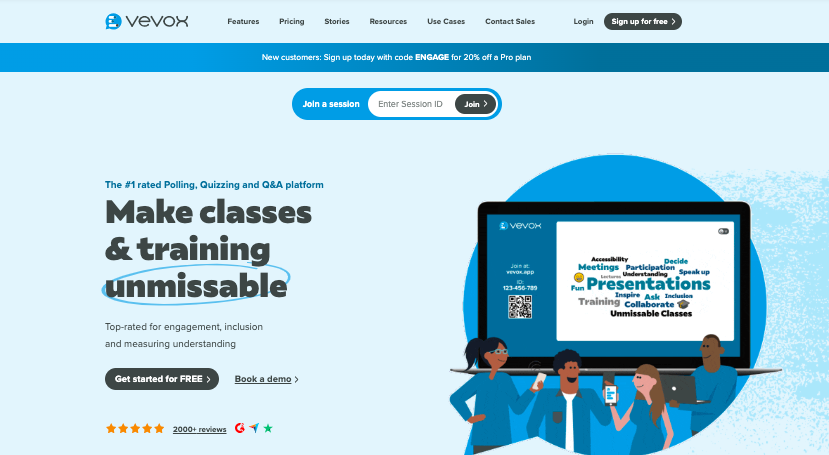
Designed mainly for education and corporate training, Vevox is another audience engagement tool that offers polls, Q&A, and survey capabilities with a prime focus on academic and professional development contexts. The platform emphasizes on data analytics and provides detailed insights into audience responses and engagement patterns.
Key Benefits
- Academic-focused features
- Advanced question types
- Comprehensive reporting
- LMS integration support
- Moderation controls
What’s Great
- Detailed analytics and reporting
- Good integration capabilities
- Professional interface
- Strong data export options
- Suitable for research purposes
What Can Improve
- Steeper learning curve
- Higher cost than some alternatives
- Limited free version
- Requires internet connection
- Less gamification than competitors
22. Pear Deck
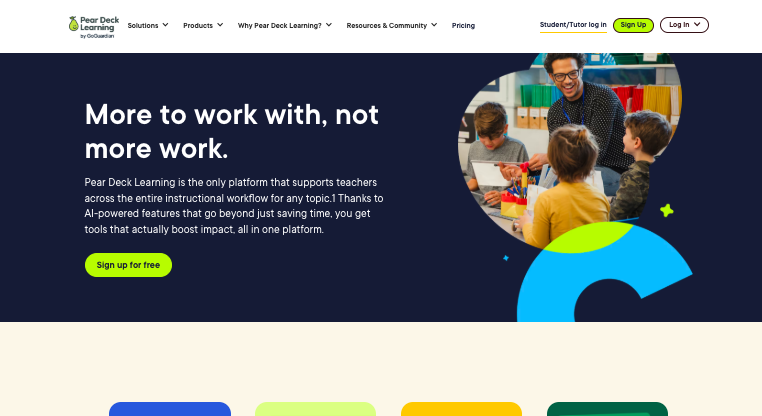
Pear Deck transforms Google Slides and PowerPoint presentations into interactive experiences. Students can respond to questions, draw on slides, and participate in real-time activities. The platform focuses on formative assessment and provides teachers with immediate insights into students’ understanding.
Key Benefits
- Google Slides integration
- Interactive slide activities
- Drawing and annotation tools
- Student-paced and teacher-paced modes
- Immediate feedback collection
What’s Great
- Easy drag-and-drop question creation
- Real-time student pacing control
- Excellent for formative assessment
- Clean, educational interface
- Good classroom management features
What Can Improve
- Premium features require subscription
- Limited free version
- Requires Google or Microsoft accounts
- Limited question types vs. others
- Can be overwhelming for new users
23. Padlet
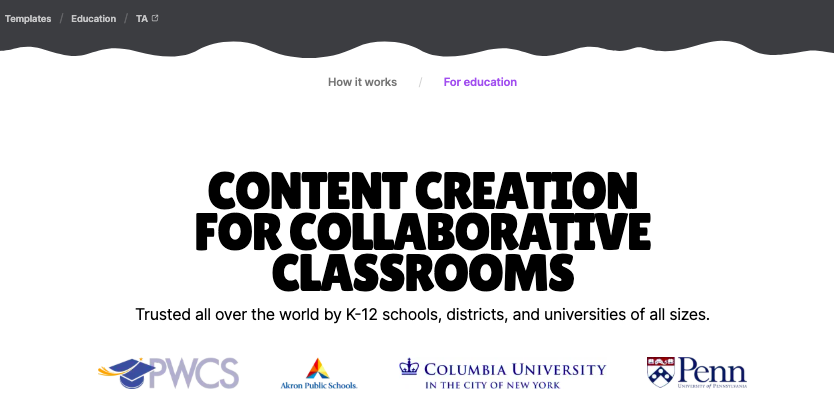
Padlet is a collaborative digital canvas where users can post content, ideas, and multimedia in various layouts. While not exclusively an audience response tool, it serves as an excellent platform for brainstorming, sharing resources, and collaborative activities in educational and professional settings.
Key Benefits
- Flexible content layouts
- Multimedia support
- Various wall templates
- Real-time collaboration
- QR code access
What’s Great
- Intuitive drag-and-drop interface
- Great for collaborative projects
- Easy sharing and embedding
- Works across all devices
- Excellent for brainstorming
What Can Improve
- Not specifically designed for live polling
- Limited real-time interaction features
- Free version has post limits
- Can become cluttered with many users
- Limited analytics compared to polling tools
24. Poll Maker
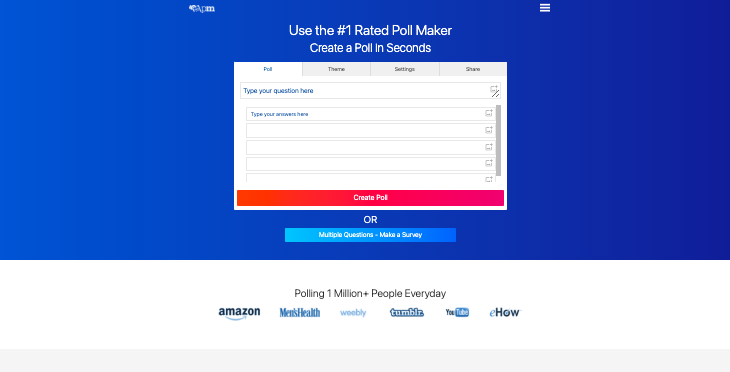
If you want a straightforward online polling tool that focuses on creating and sharing quick polls and surveys, try Poll Maker. It offers basic polling functionality with easy sharing options and simple result visualization, making it suitable for quick feedback collection and decision-making processes. Do note that Poll Maker doesn’t have a free plan, but does offer a 7-day trial if you want to get a feel of it.
Key Benefits
- Simple poll creation
- Quick sharing options
- Multiple question types
- Real-time results
- Anonymous voting options
What’s Great
- Very easy to use
- No registration required for basic use
- Fast setup and deployment
- Mobile-friendly interface
- Lightweight and fast
What Can Improve
- Limited advanced features
- Basic result visualization
- Limited customization options
- No integration with presentation tools
- No advanced reporting features
25. Edpuzzle
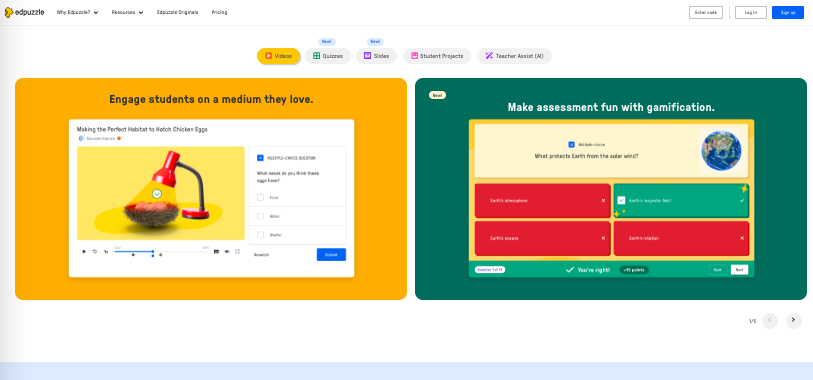
An interactive video platform, Edpuzzle allows teachers to transform any video into an interactive lesson. Teachers can add questions, voice notes, and quizzes to videos, creating engaging multimedia learning experiences. The platform tracks student progress and provides detailed analytics on video engagement.
Key Benefits
- Interactive video creation
- Built-in video editing tools
- Real-time progress tracking
- Prevents student skipping
- Voice-over capabilities
What’s Great
- Excellent for flipped classroom model
- Prevents video skipping
- Integrates with major LMS platforms
- Detailed analytics on engagement
- Large library of educational videos
What Can Improve
- Limited to video-based content
- Requires good internet connection
- Free version has class size limits
- Video upload can be slow
- Limited collaboration features
Conclusion
All these platforms provide teachers with a rich toolkit for engaging students in different ways.
The best choice depends on your specific teaching goals, student age group, and classroom context.
By using different tools, you can discover new ways to assess knowledge, foster collaboration, and create memorable learning experiences.
Remember that the most effective educational technology isn’t necessarily the one with the most features, but the one that best serves your particular learning objectives while keeping students eager to participate.
Enjoyed the post?