
If you’ve ever been hesitant to give out your email for a sketchy sign-up, Temp Mail probably sounds like a lifesaver.
It’s one of those clever little tools that let you receive emails without revealing your real inbox.
But how good is it really? How safe? And does it hold up against all the newer disposable email options out there?
Let’s dive in and find out.
What is Temp Mail & how does it actually work?
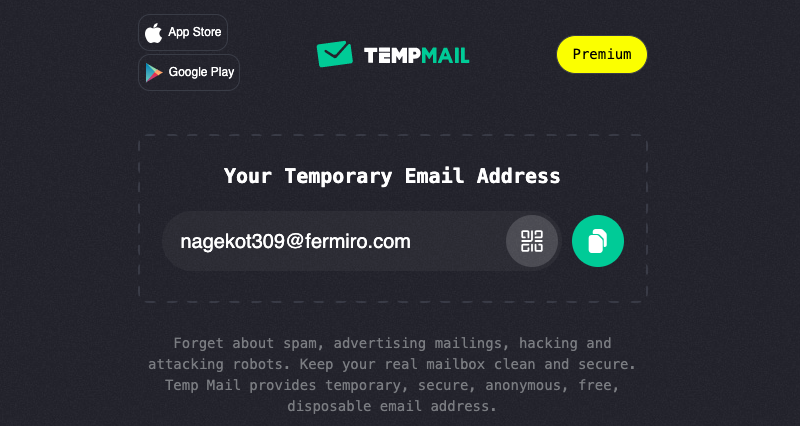
Temp Mail is a disposable email service that instantly generates a temporary email address for you to receive messages anonymously.
You visit the website or open the app, and it gives you a ready-to-use email address that’s valid for a short period.
Any emails sent to it appear in a temporary inbox that you can access immediately, and once you’re done, you can simply delete it or let it expire.
It’s designed to keep spam, promotional content, and unwanted marketing lists away from your personal email account.
Temp Mail is like a virtual mask for your inbox, simple, fast, and surprisingly handy for quick tasks.
What features does Temp Mail offer?
The main appeal of Temp Mail lies in its simplicity.
It’s quick to generate an address and start receiving emails instantly, no sign-up or personal details needed.
You can view incoming messages, read attachments, and even use it via mobile apps on Android and iOS.
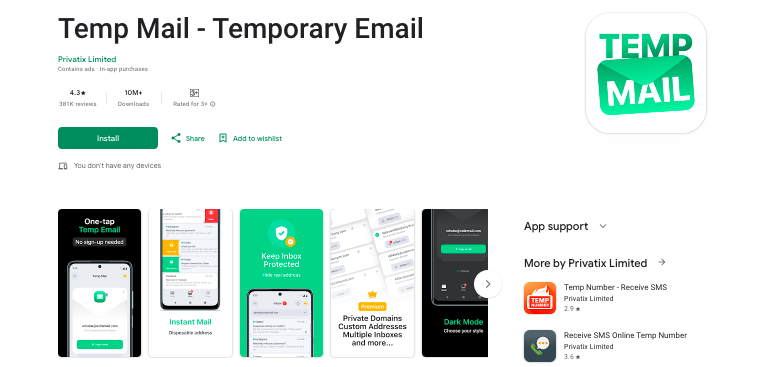
Beyond that, Temp Mail sometimes offers add-ons like multiple domains, a breach-check feature, and a premium plan that includes longer message retention, ad-free use, or a custom domain.
The service doesn’t try to overwhelm you with extras. It focuses on doing one thing really well, giving you a throwaway inbox when you need one.
Also Read: Best 10MinuteMail Alternatives
Is Temp Mail Secure?

Privacy is the main reason people turn to disposable emails, and Temp Mail markets itself as an anonymous solution.
It generally deletes messages after a short time and doesn’t require any personal data from you.
However, that doesn’t mean it’s completely bulletproof. Since messages are stored temporarily on Temp Mail’s servers, anyone with access to the system could potentially view them before they’re deleted.
So while it’s great for protecting your identity from spam, it’s not a platform for handling sensitive or confidential communications.
Think of it as a lightweight privacy shield, not a digital vault.
Has Temp Mail ever had security problems or controversies?

Yes, Temp Mail has had its share of hiccups.
In the past, security researchers have found vulnerabilities and misconfigurations that left parts of its infrastructure exposed.
While these issues were eventually addressed, they highlight the reality that disposable email services aren’t meant for secure correspondence.
The takeaway here is to treat Temp Mail as a convenience tool, not a fortress of privacy. Use it for low-stakes purposes like testing forms or signing up for newsletters, but never for accounts that matter.
Also Read: Best Mailinator Alternatives
When should I use Temp Mail and when should I avoid it?

Use Temp Mail when you want to sign up for something once and never hear from that company again.
It’s perfect for giveaways, beta registrations, or accessing downloads that require an email verification.
It’s also great for testing and QA work when you need a bunch of quick inboxes.
On the other hand, don’t use it for long-term accounts, password recovery emails, or financial services.
Those require stability and security that a temporary mailbox just can’t provide. Also, keep in mind that some websites automatically block disposable domains, so you might need a backup option in those cases.
How reliable and fast is Temp Mail at receiving messages?
Temp Mail is built for speed, and most of the time, it delivers.
Verification emails typically appear in the inbox within seconds, and the interface updates automatically.
However, occasional slowdowns or missed emails can happen, especially when traffic is heavy or if a sender’s server flags disposable domains.
It’s reliable enough for one-off use, but not something you’d want to rely on daily for critical communication.
Are there costs or premium features I should know about?

The standard version of Temp Mail is free and funded by ads, which is perfectly fine for casual users.
For frequent users or those who want a little more control, there’s a paid version that offers perks like ad-free browsing, longer storage for received emails, more domain options, and even custom aliases.
The pricing is modest, but whether it’s worth it really depends on how often you use temporary emails. For most people, the free version does the job just fine.
Explore: GuerrillaMail Review
How does Temp Mail compare to other disposable-email options?

Temp Mail is one of the most recognizable names in the disposable email world, but it’s far from the only option.
Services like 10MinuteMail, Guerrilla Mail, Mailinator, and YOPmail all serve similar purposes, each with their own quirks.
Mailinator, for instance, is popular among developers who need inbox testing tools, while Guerrilla Mail allows for custom aliases.
Temp Mail wins in ease of use and accessibility, especially on mobile, but if privacy or advanced functionality is your top priority, exploring alternatives might be worthwhile.
Is Temp Mail legal and do its terms restrict usage?

Yes, Temp Mail is perfectly legal to use as long as you’re not using it for anything shady.
The service’s terms of use prohibit illegal activity, harassment, and spam. That said, many websites frown upon disposable addresses because they make it hard to track users or maintain long-term communication.
So while it’s fine for personal privacy, it’s not ideal for businesses or accounts that rely on email continuity. Always use Temp Mail responsibly and within the limits of the law.
What are common user complaints and praise about Temp Mail?

Users love Temp Mail’s convenience and how effortless it is to use. The clean interface, instant access, and mobile compatibility get a lot of positive feedback.
On the flip side, complaints usually revolve around ads in the free version, some emails not arriving, and certain websites blocking its domains.
Security-conscious users also express concern about data handling, though most accept that for a disposable inbox, perfection isn’t the goal, simplicity is. Overall, the praise far outweighs the complaints for casual, everyday use.
Which practical tips make Temp Mail work better for me?

If you plan to use Temp Mail often, bookmark it or download the app for quick access.
Always check your inbox right after generating an address, since messages and inboxes expire fast.
Avoid using Temp Mail for anything important or time-sensitive, as messages can vanish without warning.
If a website blocks your address, try refreshing to get a new one with a different domain.
And if you want to use temporary addresses regularly but more securely, consider a paid alias service that offers encrypted forwarding.
What’s the bottom-line verdict: should I use Temp Mail?
If you just want to dodge spam and protect your real inbox from unwanted marketing, Temp Mail is an excellent tool.
It’s quick, simple, and does exactly what it promises, nothing more, nothing less. It’s not designed for secure communication or long-term use, and that’s okay.
As long as you know its limits, it can save you time, protect your privacy, and keep your inbox clutter-free.
Enjoyed the post?