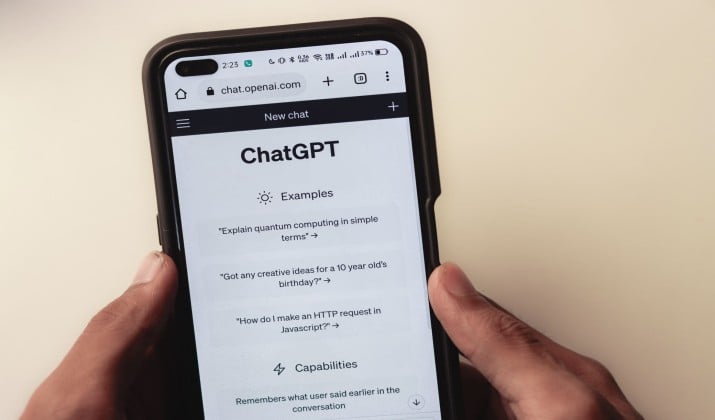
Is ChatGPT bad for the environment? That question pops up every time you see a headline about AI data centers, and the honest answer is more nuanced than a yes or no.
ChatGPT does have a real environmental footprint. It runs in massive data centers, those data centers need electricity and water, and making the chips that power them has its own cost.
At the same time, how big that footprint feels depends on things you might not think about at first: which model you use, how long your prompt is, whether you ask for text or an image, where the data center sits, what powers the local grid that hour, and how many billion queries happen that day.
So the better way to frame it is this: ChatGPT environmental impact is real, measurable, and growing with use, but it is not fixed. You can understand it, compare it fairly, and make choices that shrink it.
Is ChatGPT Bad for the Environment?

ChatGPT has a real environmental footprint, but whether it is “bad” depends on scale, electricity sources, efficiency, and the value of the task.
Every prompt you send triggers AI inference. That means servers wake up, GPUs or accelerators do math, memory moves tokens around, and cooling systems keep everything from overheating. That takes electricity. And the cooling often uses water.
OpenAI has not published a full lifecycle assessment for ChatGPT, but outside estimates help put it in context. A short GPT-4o query has been estimated at about 0.3 to 0.42 Wh in independent analyses. That is small for one prompt, but material when ChatGPT serves billions of prompts per day.
Think of it like this: one query will not change the climate. A billion queries every day, running on grids that still include fossil fuels, will.
Read this too: Notion AI vs ChatGPT
How Much Energy Does ChatGPT Use per Query?
A typical text query uses less energy than you probably imagine, and estimates differ for good reasons.
The most cited numbers cluster around 0.3 Wh per short ChatGPT query. Longer reasoning style responses can use roughly thirteen times more, around 3.91 Wh.
Why the range? Because ChatGPT energy consumption per message depends on:
- Model size and architecture: GPT-4o is smaller and more efficient than older GPT-4. GPT-5 class reasoning models use more compute per token.
- Prompt length: Input tokens cost energy to process. Output tokens cost more.
- Reasoning tokens: When a model thinks through steps before answering, it runs many internal tokens you never see.
- Data Center efficiency: Power usage effectiveness, or PUE, measures overhead. A PUE of 1.1 is excellent. Older facilities run higher.
- Utilization: A well utilized GPU rack wastes less idle power.
For comparison, a traditional Google search has been estimated at about 0.03 Wh, so a ChatGPT query often lands around ten times that for short prompts.
Running a 10W LED bulb for 18 minutes uses a similar amount of energy as a 3 Wh query. Your phone charge uses about 5 to 10 Wh. So ChatGPT electricity usage per query sits in the everyday range, not in the “running your house” range.
Where the numbers get large is total power demand. If ChatGPT serves about 1 billion queries per day at 0.3 Wh each, that is around 110 GWh per year just for inference, comparable to the annual energy use of 30,000 UK homes in one UK market analysis.
Add training, storage, networking, and the rest of OpenAI infrastructure and the total climbs.
How Much Water Does ChatGPT Use per Query?
Water is the part most people miss, and it has two pieces: direct water at the data center and indirect water used to generate electricity.
Direct water goes to cooling. Many hyperscale data centers still use evaporative cooling and cooling towers. Other sites use dry coolers or liquid cooling that recirculates fluid and needs far less water.
Indirect water comes from power plants. Thermoelectric plants that burn fossil fuels or use nuclear energy withdraw and consume water. If your data center sits on a grid with high water intensity power, its total water footprint grows even if its own cooling is efficient.
A Global Water Intelligence analysis estimated about 0.16 gallons for 30 minutes of generative AI use when you include both direct cooling and electricity generation. OpenAI leadership cited about 0.32 ml per query for direct data center water cooling in 2025, while other researchers estimate roughly 519 ml per 100 word prompt when broader boundaries are used.
The big picture: per prompt water can look tiny or like a bottle of water, depending on whether you count only evaporated water on site or also the water behind the electricity, and where the data center lives.
Most operators now aim for WUE below 1.0 L per kWh, and modern water neutral AI factory designs claim about 98 percent reduction versus older evaporative systems.
Explore: Best ChatGPT Alternatives and Similar Websites
How Much Carbon Does ChatGPT Produce?
ChatGPT carbon footprint per message comes from the same equation: energy use times carbon intensity plus embodied carbon.
CO2 equivalent, or CO2e, captures greenhouse gas emissions. For a typical ChatGPT text query, estimates sit around 0.13 to 0.19 g CO2e when running on relatively clean infrastructure, and other analyses put it near 0.15 g per response.
Location changes everything. A query processed in Poland can emit roughly 15 times more CO2 than the same query in Sweden because grid carbon intensity differs.
Three buckets make up that carbon story:
- Scope 1 emissions: fuel burned on site, like backup generators. Small for most AI data centers.
- Scope 2 emissions: electricity you buy. This dominates ChatGPT carbon emissions per query.
- Scope 3 emissions: everything else in the value chain. That includes semiconductor manufacturing, server manufacturing, building construction, and employee travel. Embodied carbon lives here.
OpenAI, like other hyperscalers, reports market based emissions that reflect power purchase agreements and renewable energy credits.
Those can look much cleaner than location based emissions that reflect the actual grid where the data center sits. Both views matter if you care about ChatGPT sustainability.
Why Do AI Data Centers Use So Much Electricity?
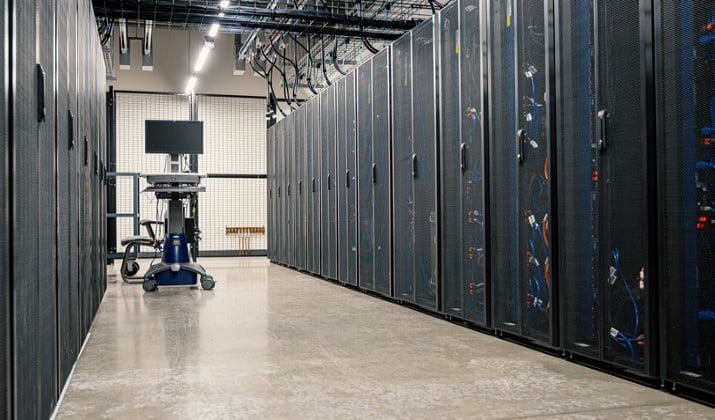
AI data center energy use is high because large language model inference is a different kind of work than hosting a website.
A website serves a file. An LLM generates tokens one by one, keeping a large state in memory. That requires:
- GPUs and accelerators running at high power. A single server rack can draw 40 to 100 kW in AI racks versus 5 to 10 kW for traditional cloud racks.
- Memory bandwidth. Moving model weights and KV cache eats energy.
- Always on infrastructure. You keep models loaded in memory so latency stays low, even when no one is querying that second.
- Networking and storage. Your prompt travels through load balancers, inference routers, vector stores, safety filters, and logging systems.
- Redundancy. Hyperscale data centers keep extra capacity for reliability and for traffic spikes.
The United States hosts roughly 45 percent of global AI data center capacity by power draw, and hyperscaler water consumption for AI rose 25 to 40 percent year over year in 2024 to 2025 disclosures, which shows how fast capacity grew.
Efficiency improved, but total power demand still climbed because usage climbed faster.
Does Training ChatGPT Use More Energy Than Using It?
Training looks huge in isolation, but inference dominates over time for a popular model.
Energy for GPT-4 training has been estimated at over 50,000 tons of CO2e, similar to the lifetime emissions of about 100 cars, and some reports put GPT-4 training at around 5,000 tons of CO2. Those numbers vary because training runs, hardware counts, and electricity mixes differ.
Here is the flip. Once a model goes live, every ChatGPT query adds a little more energy. One workload model estimated that one year of ChatGPT like inference produces about 25 times the carbon emissions of training GPT-3.
Analysts estimate the lifecycle split for leading chat systems sits around 63 percent inference and 37 percent training. So if you care about ChatGPT training energy consumption, you should care even more about inference efficiency, because that is where the meter keeps running.
Check this out: Best ChatGPT Apps for iPhone
Does ChatGPT Use Renewable or Nuclear Energy?
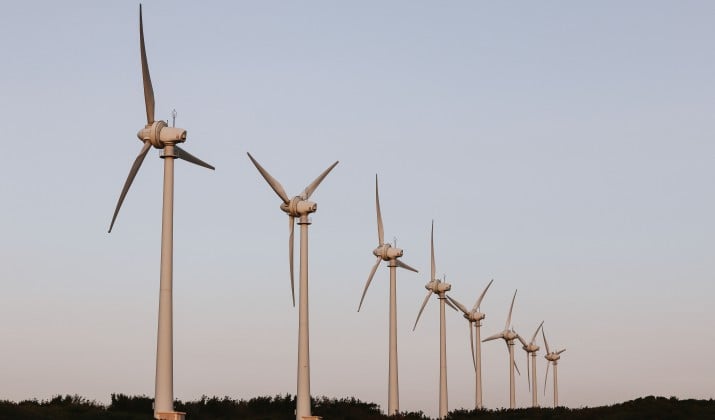
Most hyperscalers buy renewable energy through power purchase agreements, or PPAs. That means they fund a wind or solar farm somewhere and claim its output against annual consumption. Some also pursue carbon free energy that includes nuclear energy, which runs around the clock with low carbon intensity.
OpenAI does not own most of its data centers. It rents capacity from Microsoft Azure and others. Microsoft has been pushing for 24 by 7 carbon free energy matching, where clean energy matches demand hour by hour in the same grid region. That is harder and more meaningful than annual matching because wind and solar vary by hour.
Grid constraints still bite. You can sign a PPA in Texas while your GPU cluster runs in Virginia. On paper, your market based emissions drop to zero.
On the physical grid, local fossil plants may still run to meet that evening peak. That gap between market based and location based accounting is why data transparency matters for responsible AI sustainability.
Is ChatGPT Worse for the Environment Than Google Search?
Per query, ChatGPT uses more energy than Google search.
A typical ChatGPT query at about 0.34 Wh is roughly ten times a traditional Google search at about 0.03 Wh. A recent analysis put the range for ChatGPT class queries at 0.3 to 3 Wh, or about 3 to 10 times a search, depending on model size and serving infrastructure.
But the comparison is imperfect for three reasons:
- Modern Google search also uses generative AI features, which raise its energy use.
- One ChatGPT answer can replace five to ten searches if it synthesizes sources for you.
- Energy is not the only metric. Water, carbon intensity, and embodied carbon change the ranking by location.
So for a simple factual lookup, search often has a smaller ChatGPT environmental footprint equivalent. For a complex synthesis, the trade off gets closer.
Does a Longer ChatGPT Prompt Use More Energy and Water?
Yes. ChatGPT energy use per prompt scales with tokens and work.
You pay in compute for:
- Input tokens. A 10,000 token document costs more to read than a ten word question.
- Output tokens. Long answers need many generation steps.
- Reasoning tokens. When you ask a hard math or coding problem, the model can generate thousands of internal tokens before you see the answer. That can push energy from 0.3 Wh to near 3.9 Wh.
- Multimodal AI inputs. Images, audio, and video require encoders that add compute.
- Agentic tasks. When ChatGPT acts as an AI agent and calls tools, browses, or runs code in loops, it runs inference many times.
So a concise prompt with clear context usually uses less energy and water than a sprawling thread with repeated regenerations. That is one lever you control.
Does ChatGPT Image Generation Have a Higher Environmental Impact?

Usually, yes. Image generation runs a different model, often a diffusion model, that iterates many denoising steps. That takes more accelerator time than a short text response.
Studies found that generating images or video take more energy per request than plain text. Water tracks with energy if the data center uses evaporative cooling, so image prompts often carry higher ChatGPT water use per prompt as well.
If you generate twenty variations to get one you like, you multiply that impact. Picking one and refining it is more efficient.
Also read: Best ChatGPT Alternatives for Image Generation
Does ChatGPT Coding and Agent Use Consume More Energy?
Yes, because coding assistant and AI agent workflows amplify inference.
When you ask ChatGPT to debug code, plan a project, or act autonomously, it might:
- Keep a long context window of 100k tokens or more in memory.
- Run multiple reasoning passes.
- Call external tools, retrieve files, execute code, read errors, and try again.
Long contexts increase memory traffic and repeated tool calls increase total ChatGPT electricity per query. The question to ask is whether the agent saved you hours of human computer time and cloud compute elsewhere. Lifecycle thinking helps here.
Can ChatGPT Become Environmentally Sustainable?
It can get much closer, but it takes work across the stack.
What helps today:
- Efficient models: Smaller, distilled models for simple tasks cut ChatGPT power consumption per query dramatically. Use GPT-4o for everyday chat, not the largest reasoning model, when you do not need deep reasoning.
- Better chips: New accelerators deliver more tokens per watt.
- Advanced cooling: Liquid cooling and dry coolers push WUE toward zero operational water at many sites.
- Waste heat reuse: Some Nordic and Canadian data centers heat homes or greenhouses with server heat.
- Renewable procurement that matches load hour by hour: PPAs plus storage plus nuclear energy can lower carbon intensity and power usage at night.
- Right sizing: Routing a query to the smallest model that can handle it reduces LLM energy consumption without hurting quality.
Green AI and sustainable artificial intelligence are not just slogans here. They point to design choices: measure per model, per query, and per data center, then optimize.
How Can Users Reduce Their ChatGPT Environmental Footprint?
You do not need to quit ChatGPT. Small habits lower ChatGPT water usage and energy use without losing value.
- Ask concise prompts with the key context included. That avoids extra turns.
- Avoid unnecessary regenerations. Edit your prompt instead of hitting regenerate repeatedly.
- Use smaller models for simple tasks. If your app offers a choice, pick the efficient one for summaries and drafts.
- Batch work. Ask for five social captions at once instead of five separate calls. You reuse the input context.
- Avoid duplicate image generation. Generate low resolution drafts first, then upscale one.
- Turn off always on agent loops when you do not need them.
- Choose providers with credible environmental disclosure, not just marketing claims about carbon free energy.
You also reduce impact by valuing the output. If a ChatGPT answer helps you write a grant, fix a bug faster, or learn something you would otherwise fly to learn, its environmental cost can be net positive.
What Are the Biggest Uncertainties in ChatGPT’s Environmental Impact?
Three gaps keep estimates fuzzy ithis year.
First, limited disclosure. Recently, researchers noted no water per prompt figure from Anthropic, Meta, or xAI, and only high level WUE from Meta at 0.19 L per kWh in 2024. OpenAI shared average energy and water per query in a blog post, but not per model, per region, or per modality.
Second, different accounting boundaries. Some estimates count only direct data center electricity. Others add networking, storage, power plant water, and embodied carbon.
Third, variable operations. Providers do not say which data center served a request. Load shifting, batching, and caching change energy per query hour by hour.
Audited measurements with clear boundaries would shrink the uncertainty and help buyers pick sustainable artificial intelligence options with confidence.
Where Does That Leave You?
ChatGPT has a measurable energy demand, water footprint, and carbon footprint.
For one short prompt, that footprint looks small, around 0.3 to 0.42 Wh and a fraction of a gram of CO2e in clean regions, with water ranging from a fraction of a milliliter on site to hundreds of milliliters when you include the grid and methodology differences.
At scale, with billions of prompts, plus image generation, coding assistant use, and AI agent loops, the totals become material, and they compete with other growing uses of electricity and water in the same communities.
The path forward is not to use less intelligence, but to use it more wisely. Pick the right model size for the job, keep prompts focused, avoid wasteful regenerations, and favor providers that publish PUE, WUE, carbon intensity, and model level energy data.
ChatGPT sustainability improves when efficiency, clean power, better cooling, and thoughtful use move together. When you understand how prompt length, reasoning depth, model choice, data center location, and electricity mix interact, you can keep the benefits of generative AI while keeping its environmental cost in check.