The mainstream media isn’t going to give it to you straight. Not now, not ever.
If you’re tired of watered-down talking points, scripted “both-sides” nonsense, and headlines that feel more like propaganda than journalism, you need a new lineup in your earbuds, and you need it today.
Conservative podcasts have exploded into one of the most powerful, unfiltered, and downright addictive ways to get real news, sharp commentary, and bold takes on everything from the economy to the culture war.
These hosts don’t flinch, they don’t apologize, and they sure don’t sugarcoat. Whether you want hard-hitting political analysis, faith-based wisdom, legal breakdowns, or just a few laughs while the world burns, there’s a show on this list with your name on it.
Buckle up. We’ve rounded up the 25 best conservative podcasts dominating the airwaves right now, and trust us, skipping this list would be a massive mistake.
Let’s get into it.
Explore: Best Conservative Podcasts On YouTube
Best Conservative Podcasts
1. The Ben Shapiro Show
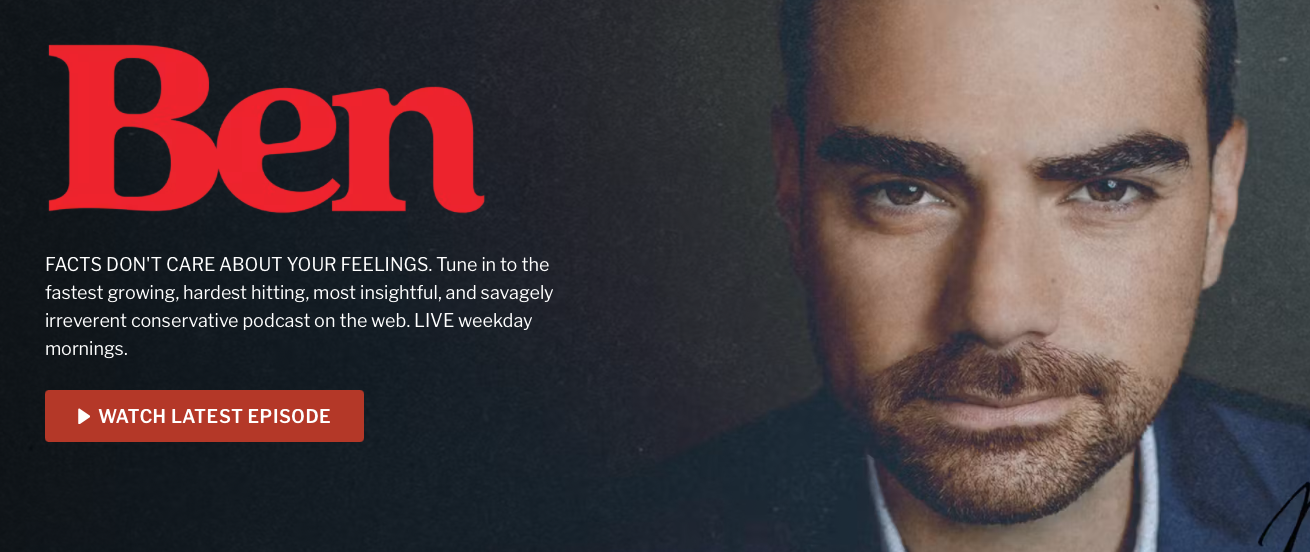
A Daily Wire production and one of the most downloaded political podcasts in the country, running Monday through Friday with episodes typically under an hour.
Each show opens with a rapid news rundown, followed by Shapiro’s signature point-by-point breakdown — citing sources, quoting opposing arguments directly, then dismantling them line by line.
He’s a Harvard Law graduate, and it shows in how methodically he builds an argument before delivering the gut punch. Regular segments include listener mailbags and “Twitter takedowns,” where he reads and responds to viral left-leaning posts in real time.
2. The Charlie Kirk Show
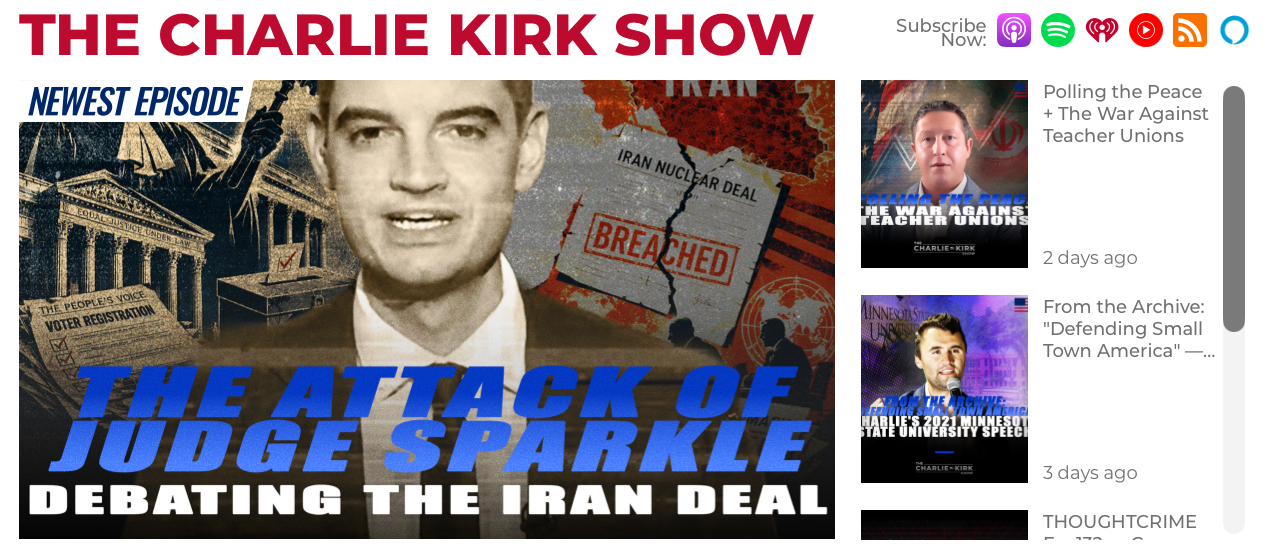
Hosted by the founder of Turning Point USA, this show runs daily and leans heavily into youth and campus politics, a beat almost no other major conservative host covers with this much depth.
Kirk frequently broadcasts live from college campuses, takes unscripted questions from students (often hostile ones), and posts the exchanges as standalone episodes.
Expect heavy coverage of school board fights, Title IX policy, and grassroots organizing tactics, alongside interviews with sitting members of Congress and state-level candidates.
3. Mark Levin Podcast
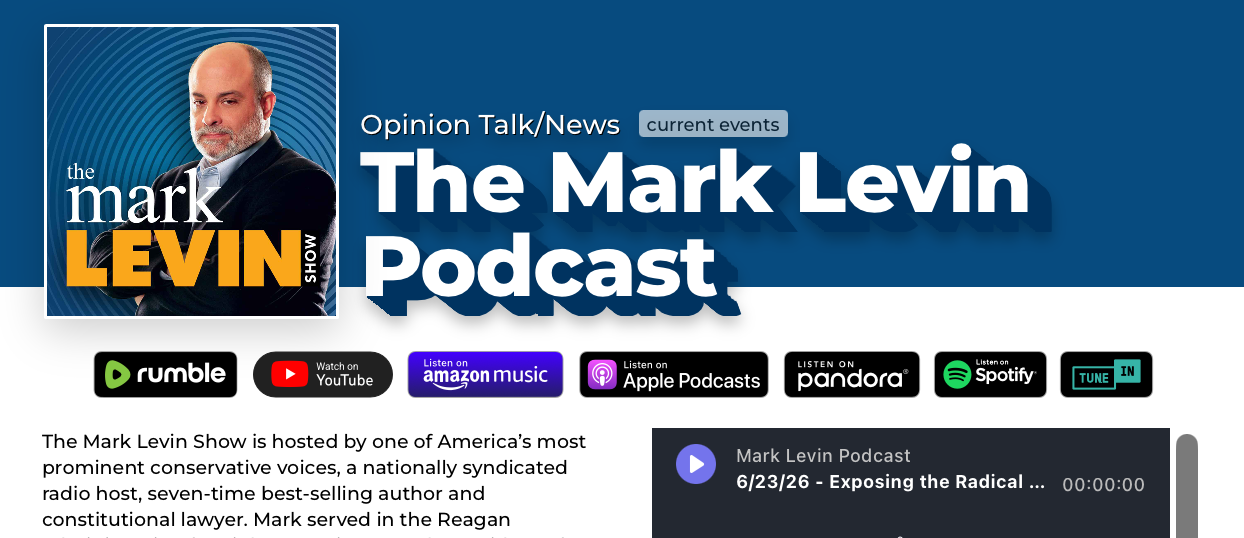
Levin has been doing this since 2017, and his background as a former Reagan administration official and constitutional litigator drives the format: long, dense, single-topic monologues rather than quick news hits.
Episodes run upward of 90 minutes, often built around a single piece of legislation, court case, or executive action that he walks through clause by clause.
He airs weeknights on nearly 400 radio stations before the podcast version drops, and he’s known for naming specific judges, justices, and statutes rather than speaking in generalities.
Also Read: Best Conservative News Websites
4. The Michael Knowles Show

A daily Daily Wire show built around close reading, Knowles will often spend a full episode parsing a single op-ed, academic paper, or piece of legislation sentence by sentence, exposing the underlying assumptions.
His background in classical rhetoric and philosophy shows in how he structures arguments, frequently invoking historical and literary references most political podcasts skip entirely.
He also does recurring debate-style episodes where he invites critics on specifically to argue with him on air.
5. The Matt Walsh Show
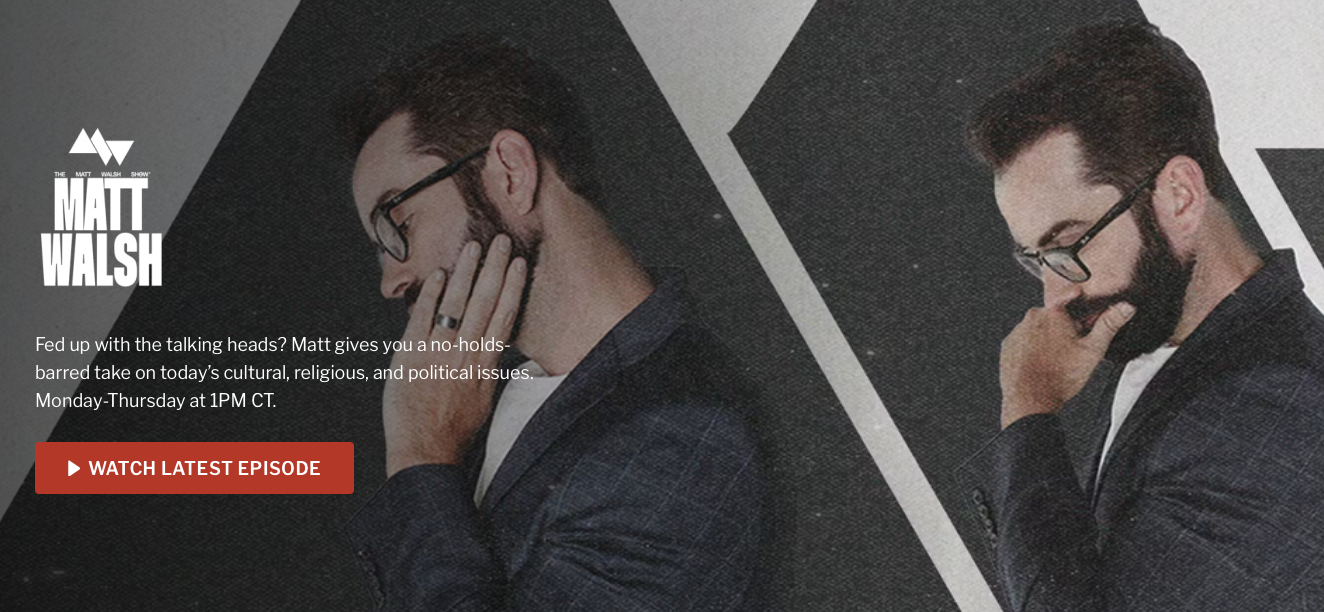
Walsh’s format alternates between solo commentary episodes and documentary-style projects.
He’s released full-length investigative documentaries through the same feed, including pieces on gender medicine and progressive education policy.
His daily episodes tend to focus on one or two stories in depth rather than a broad news sweep, often built around a piece of video or a specific quote he plays and responds to directly, point by point.
6. Verdict with Ted Cruz
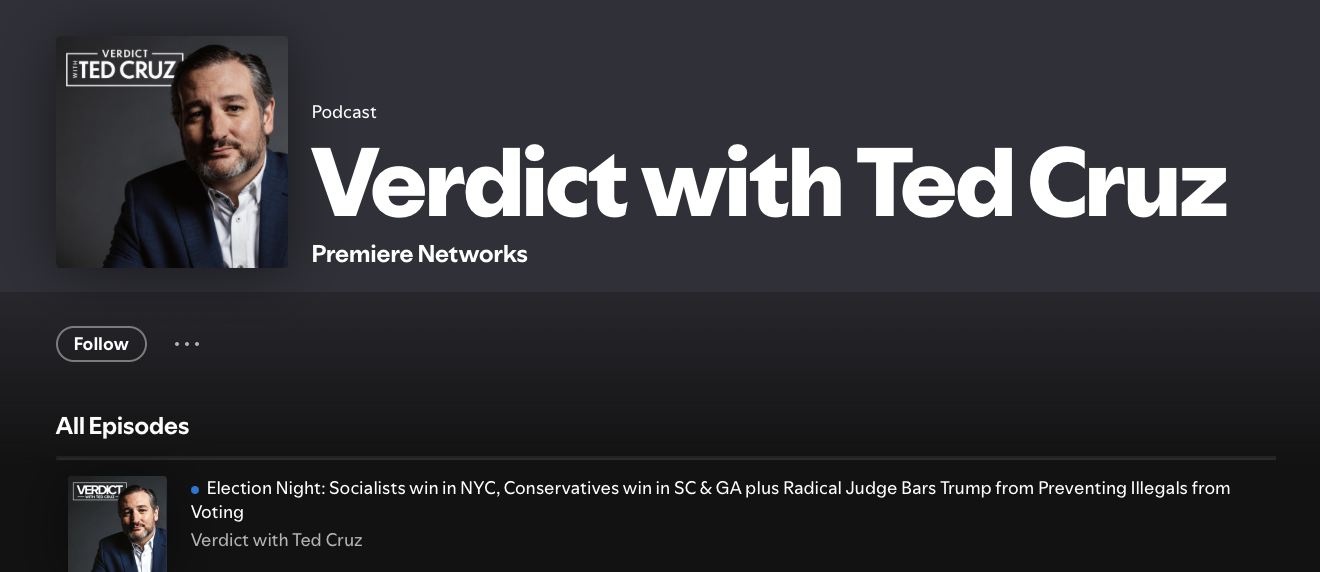
Released several times a week, this show is structured as a conversation between Cruz and co-host Ben Ferguson, giving it more of a back-and-forth radio feel than a monologue.
Because Cruz sits on the Senate Judiciary Committee, episodes frequently include specifics on pending legislation, confirmation hearings, and Supreme Court arguments that he’s tracking firsthand, material most commentators only get secondhand.
He also brings on sitting senators and House members as recurring guests.
Check Out: The Daily Wire Review
7. The Dan Bongino Show
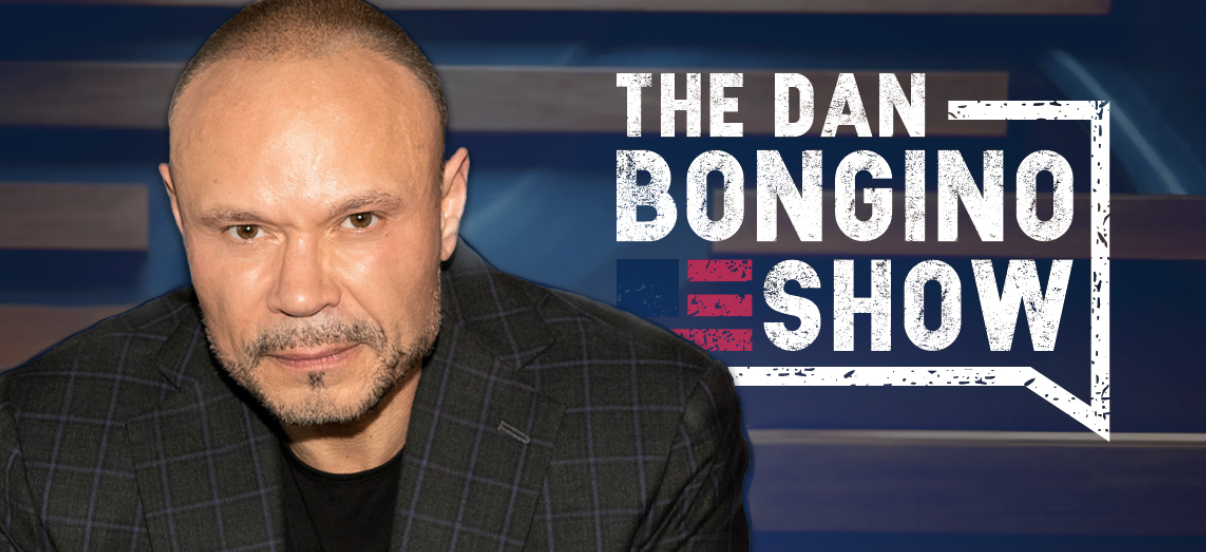
A daily show built on Bongino’s background as a former NYPD officer, Secret Service agent, and Senate candidate.
Episodes typically run 60–90 minutes and are split between a news monologue and listener call-ins, with Bongino frequently pulling from his law enforcement background to dig into stories about FBI conduct, border security, and federal overreach with procedural detail other hosts skip.
He also runs a separate, shorter “Hotline” segment within the feed for rapid-fire reactions to breaking stories.
8. Relatable with Allie Beth Stuckey
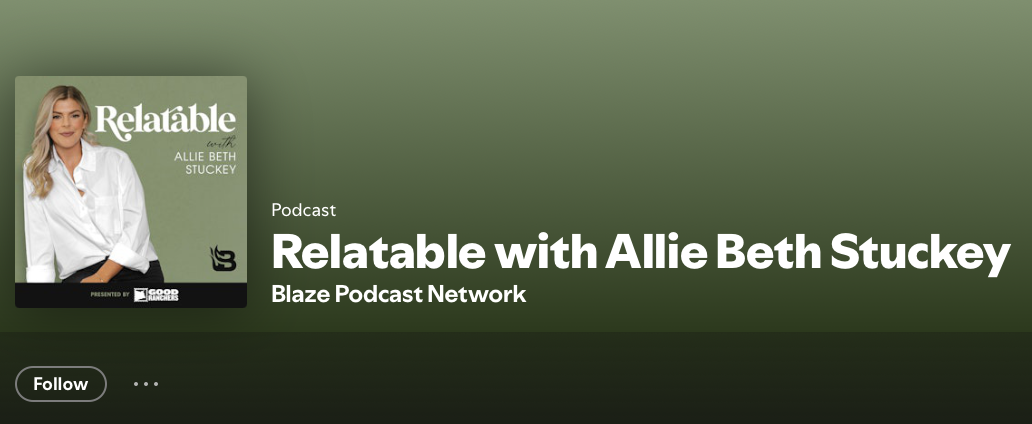
A BlazeTV production released several times a week, averaging just over an hour per episode.
Stuckey’s format blends political news with theology and cultural commentary, frequently bringing on pastors, authors, and academics for extended one-on-one interviews rather than quick panel hits.
She’s especially focused on issues at the intersection of faith and policy, parental rights, gender ideology in churches and schools, and the role of Christian institutions in public life.
9. The Glenn Beck Program
Beck has run this show in some form since the early 2000s.
The current BlazeTV version keeps his trademark approach: connecting current events to historical patterns using primary documents, archival footage, and original research his team compiles ahead of each episode.
He frequently builds entire episodes around a single historical parallel, comparing modern policy debates to specific moments in 20th-century history, supported by maps, timelines, and documents he displays on screen for the video version.
Check Out: Best Independent News Podcasts
10. The Steve Deace Show
A daily BlazeTV show with a sharper, more combative tone than most faith-focused programming.
Deace, a former Iowa talk radio host, spends a lot of time on intra-conservative disputes, calling out Republicans he views as insufficiently committed to core positions, rather than just attacking the left.
Episodes regularly run past 90 minutes and include detailed breakdowns of state-level legislation, particularly around education and religious liberty.
11. The Sean Hannity Show
One of the longest-running conservative talk shows in the country, syndicated across hundreds of radio stations with the podcast as a same-day repackage of the broadcast.
The format leans heavily on interviews. Hannity regularly hosts sitting senators, governors, and administration officials, paired with listener call-ins. Episodes tend to track the day’s biggest political story closely rather than going deep on a niche topic.
12. The Tucker Carlson Show
Since leaving cable news, Carlson has shifted almost entirely to long-form, single-guest interviews, often running 60 to 90 minutes uninterrupted with no commercial breaks inside the conversation itself.
His guest list ranges from sitting and former government officials to scientists, historians, and businesspeople.
He frequently lets interviews run into territory, foreign policy, intelligence agencies, public health institutions, that mainstream interviewers tend to avoid.
Episodes are released on his own platform rather than through a network.
Check Out: The Blaze Review
13. The Megyn Kelly Show
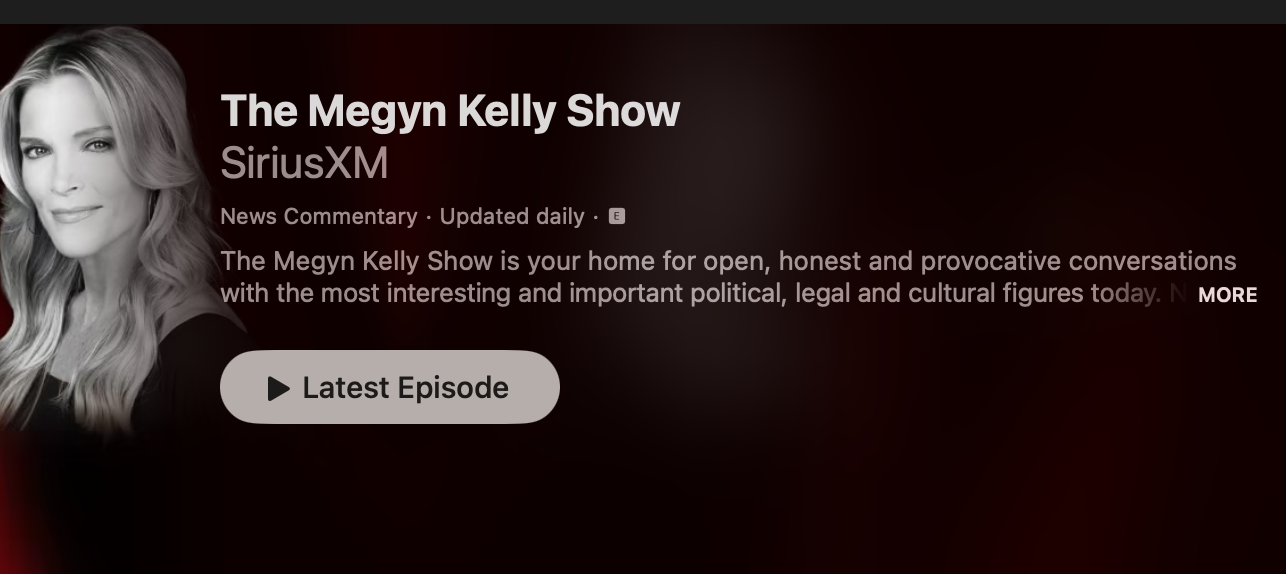
A daily SiriusXM show hosted by a former litigator and Fox News anchor, which shows in her interview style.
She comes prepared with specifics and pushes guests to answer directly rather than letting talking points slide. The format mixes solo commentary on legal and media stories with extended interviews.
She’s known for being willing to challenge guests from her own side of the aisle, not just political opponents.
14. PBD Podcast

A roundtable-format show hosted by entrepreneur Patrick Bet-David, typically running two to three hours with a rotating panel of co-hosts and guests holding different political views, which produces genuine on-air disagreement rather than an echo chamber.
Bet-David’s business background shapes a lot of the framing.
Episodes often connect political and economic policy to specific business and market consequences, with detailed numbers rather than abstract commentary.
15. The Federalist Radio Hour

Produced by the editorial team at The Federalist, this show runs several times a week and functions as an audio extension of the publication’s written work.
The hosts frequently interview the Federalist writers who authored a given week’s most-discussed pieces.
Topics lean toward media criticism, legal analysis, and policy detail, with a noticeably more wonkish, citation-heavy style than most talk-radio-style podcasts on this list.
16. The Larry Elder Show
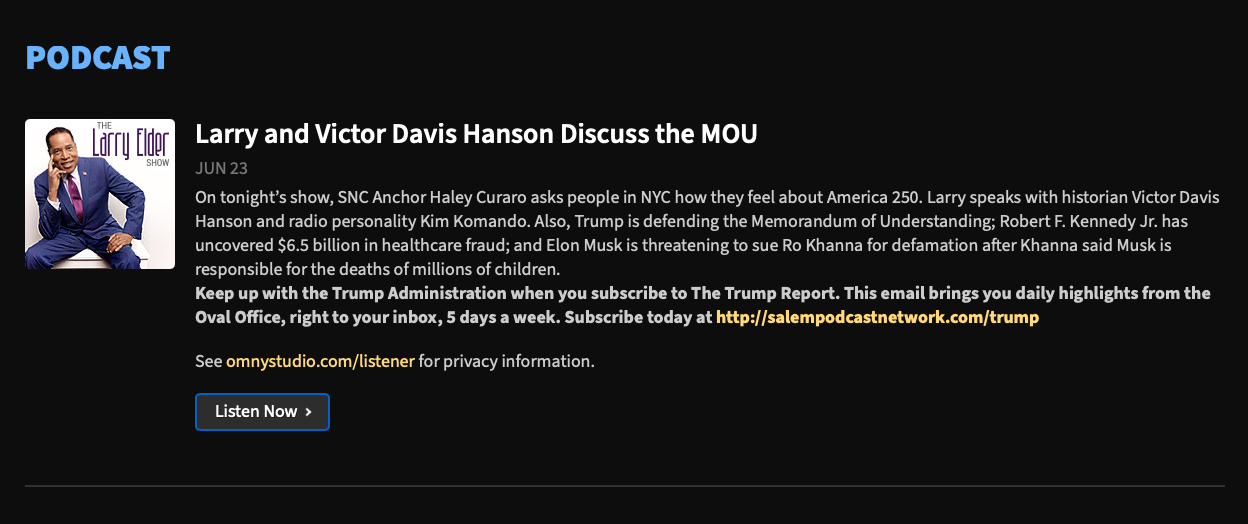
Elder, a lawyer and longtime Los Angeles radio host who ran for California governor in the 2021 recall election, built his show around personal-responsibility arguments backed by economic data.
He frequently cites specific statistics on crime, fatherlessness, and welfare policy rather than relying on anecdote alone.
Episodes mix solo commentary with listener call-ins, a format he’s run for over two decades on talk radio before moving to podcast distribution.
Check Out: The Townhall Review
17. The Buck Sexton Show
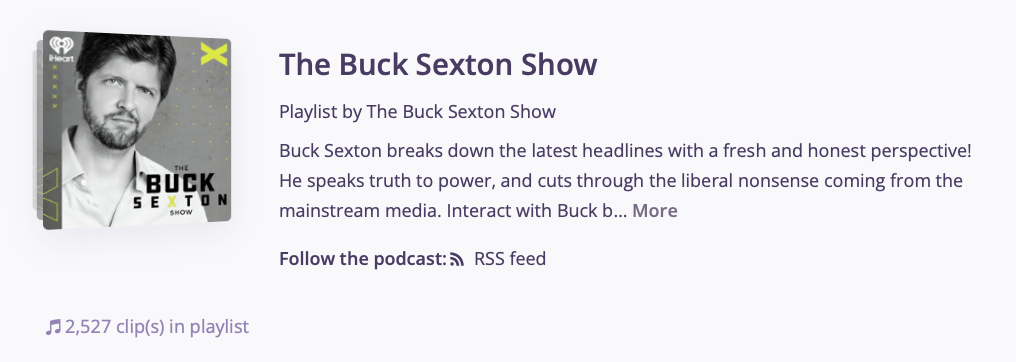
Hosted by a former CIA counterterrorism analyst, this daily show leans into national security and intelligence community stories with a level of procedural detail most political podcasts can’t match.
Sexton will walk through how an agency investigation or clearance process actually works before commenting on it.
He also co-hosts a separate radio program with Clay Travis, but this solo feed focuses more narrowly on policy and security analysis.
18. The Jesse Kelly Show
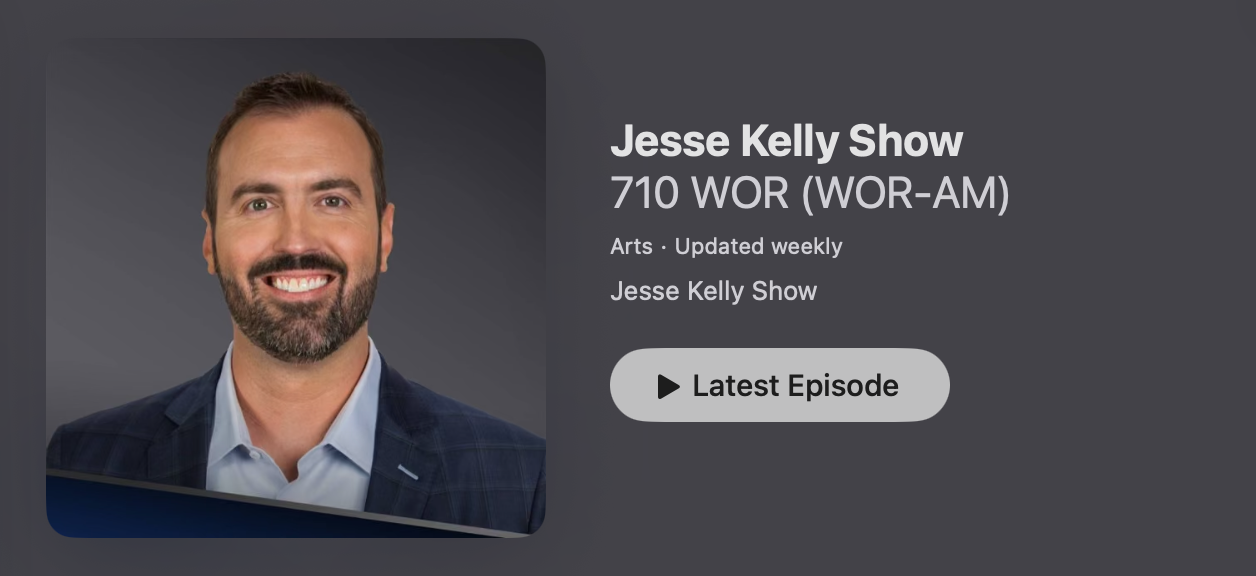
An iHeartRadio show hosted by a Marine Corps veteran, mixing political commentary with personal stories from his military service and a noticeably more irreverent, joke-heavy delivery than most talk shows in this space.
Kelly frequently runs recurring bits and call-in segments built around absurd news stories, using humor as the entry point into more serious arguments about foreign policy and military readiness.
19. Triggered with Donald Trump Jr.
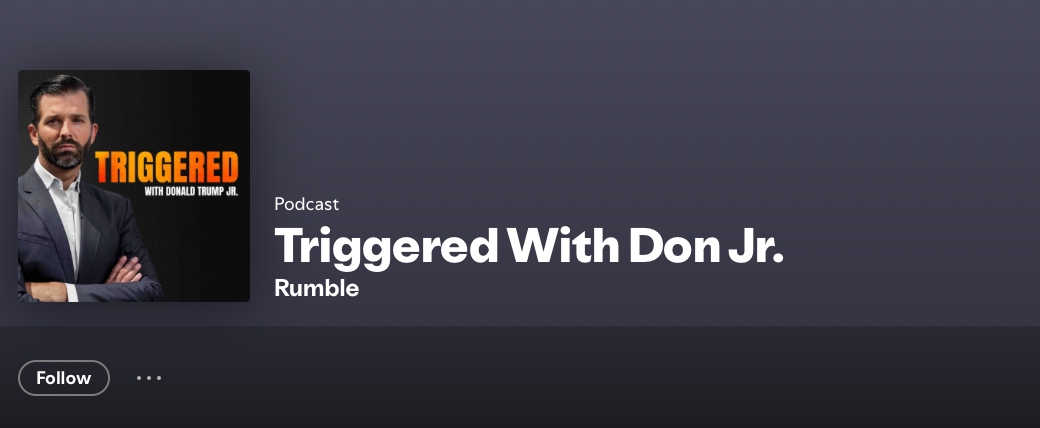
A weekly interview show released on Rumble, structured around long-form, mostly unedited conversations with guests pulled from inside Republican politics, business, and media, sitting officials, campaign strategists, and family members included.
Because of Trump Jr.’s direct access to the upper levels of the Republican Party, episodes often include details on internal campaign strategy and party dynamics that don’t surface in other interview formats.
Check Out: Fox News Review
20. The Candace Owens Show
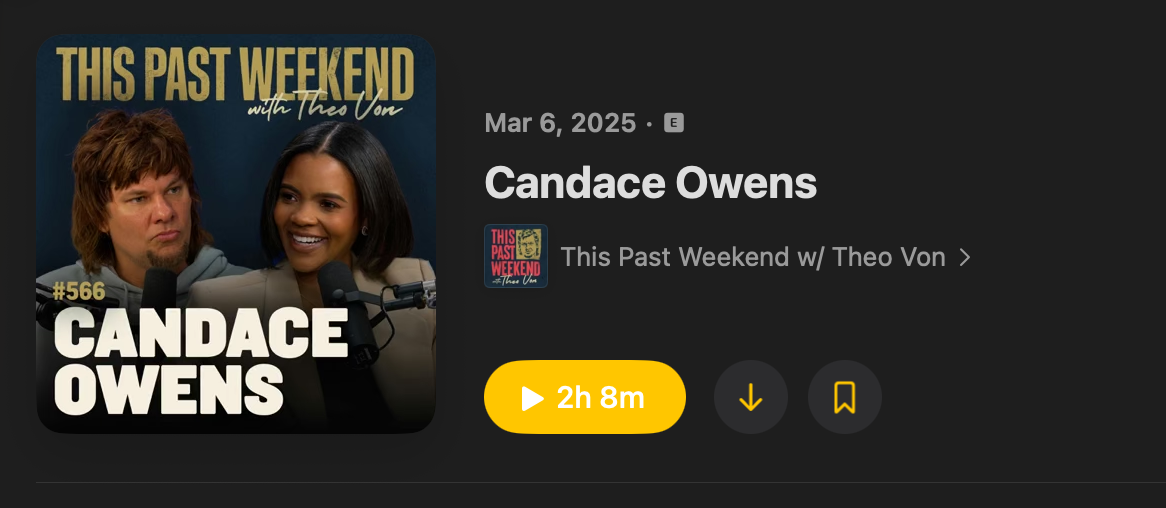
Owens runs her show independently after departing the Daily Wire, with a format that mixes solo monologues, listener Q&As, and interviews, often centered on media bias and identity politics.
She’s built a reputation for directly naming and challenging specific public figures and institutions by name.
Her episodes frequently respond point-by-point to criticism she’s received online in prior weeks.
21. The Michael Berry Show
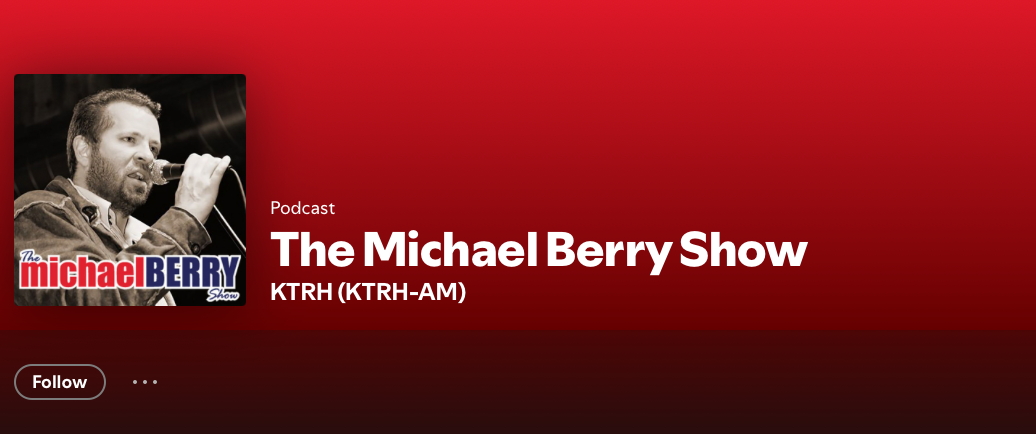
A Houston-based talk radio veteran whose podcast version preserves the local-radio call-in format, long stretches of listener calls mixed with Berry’s commentary, heavy on Texas-specific politics, border policy, and energy industry issues alongside national news.
His style relies more on storytelling and personal anecdote than data citation, giving it a different texture than the more academic shows on this list.
22. The Officer Tatum Show
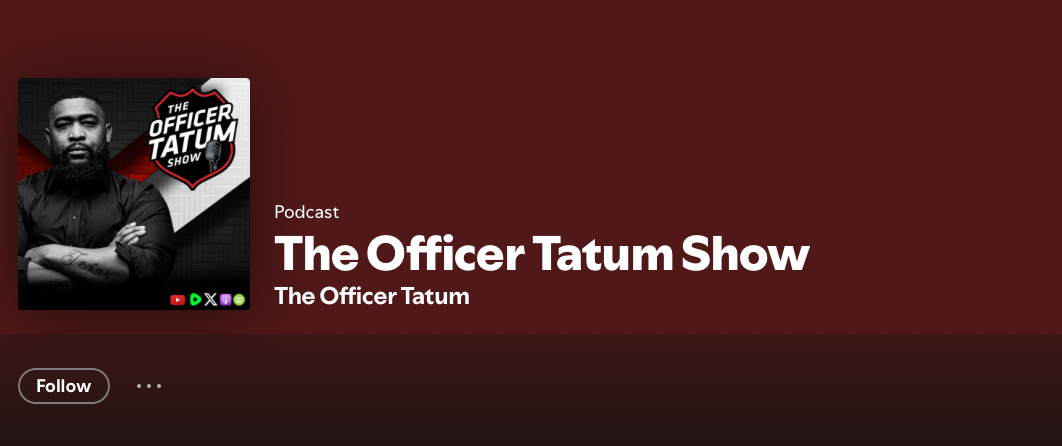
Hosted by a former police officer, the show focuses specifically on crime policy, police reform debates, and law enforcement stories from the perspective of someone who worked the job.
He regularly breaks down body camera footage and use-of-force incidents in detail before giving his read, rather than commenting from headlines alone.
Also Read: Most Popular Liberal News Websites
23. Ruthless
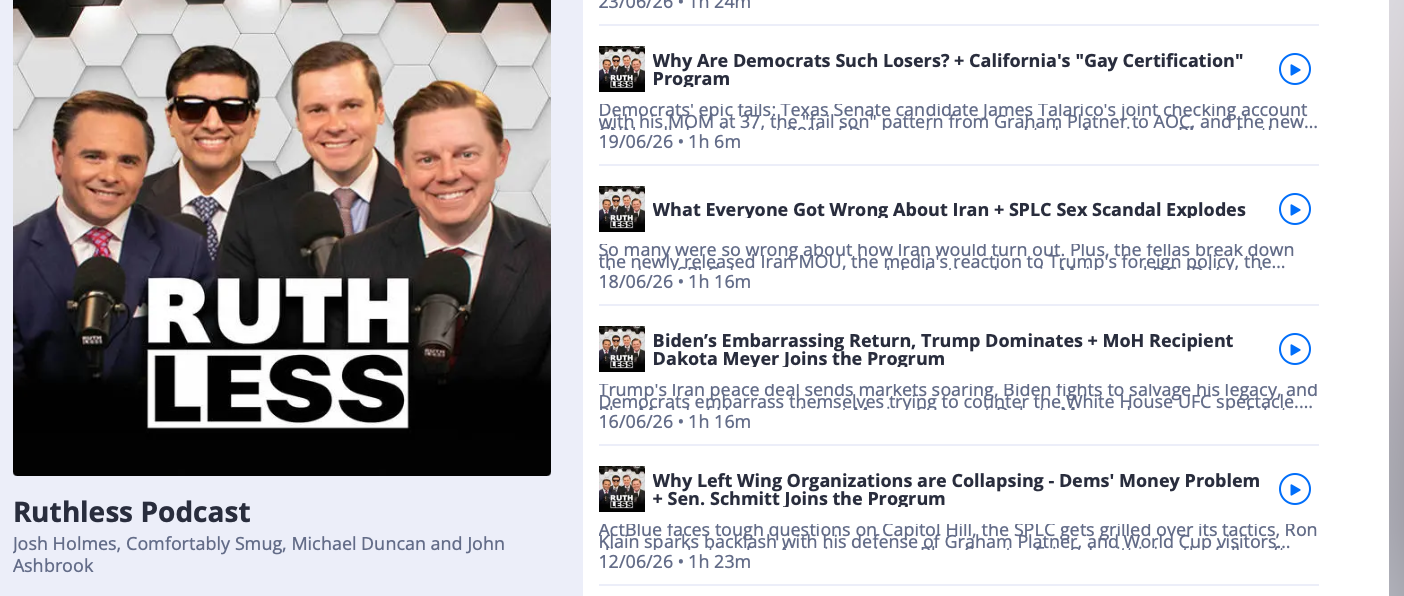
A multi-host roundtable built by former Republican campaign and Hill staffers, which gives it an insider’s view of Republican Party strategy, primary dynamics, and legislative maneuvering that outside commentators usually don’t have access to.
The tone is more conversational and joke-heavy than policy-focused shows, but the hosts’ direct campaign experience means specific strategic details.
Ad spending, polling memos, internal party disputes, come up regularly.
24. The Vince Coglianese Show
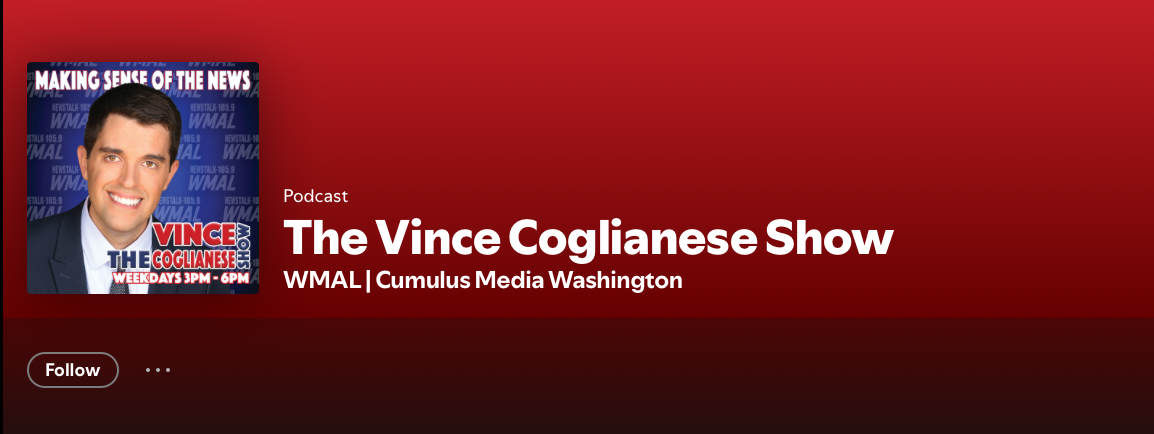
A Washington, D.C.–based daily show on WMAL, giving Coglianese closer proximity to Capitol Hill sourcing than most national podcasts.
He regularly has congressional staffers and reporters covering Congress on as guests within hours of a story breaking.
The format is a fairly traditional news-and-commentary mix, but the D.C. dateline means faster turnaround on fast-moving legislative stories.
25. Red Eye Radio
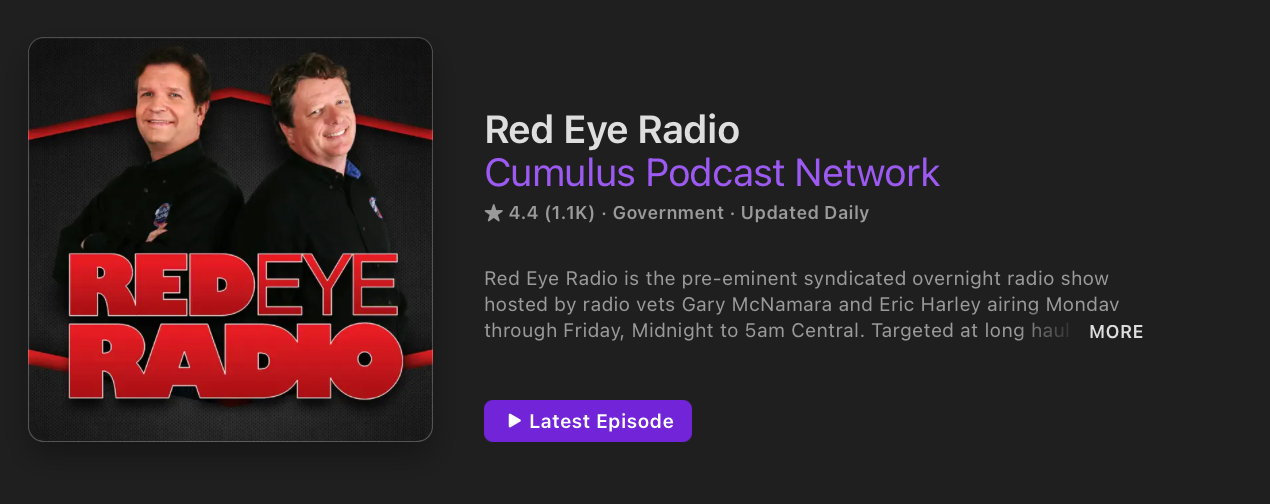
Hosted by radio veterans Gary McNamara and Eric Harley, airing live overnight (midnight to 5 a.m. Central) before being cut into a podcast feed, a scheduling niche almost no other show on this list occupies.
The overnight slot shapes the content: heavier on trucking industry and night-shift-worker issues, plus extended listener call-in segments, alongside standard daily political commentary.
Also Read: Newsmax Review
Final Words
If you only add one show to your queue today, make it The Ben Shapiro Show.
Here’s why: it’s daily, it’s fast, it’s deeply researched, and it covers more ground in 30 minutes than most outlets manage in a week.
Shapiro’s combination of speed, sourcing, and unapologetic conservative principle has made his show the gold standard that nearly every other host on this list gets compared to And that’s not by accident.
That said, these are some excellent presenters. Feel free to schedule them on your calendar.