Practicing law is an arduous task that requires excellent critical thinking and problem-solving skills, and quick and easy access to an ever-growing body of case law and legal research.
This is where LexisNexis comes in. LexisNexis is a research and legal analysis tool used by many people worldwide.
The site contains terabytes of data from all over the internet, which can be extremely useful for legal research. It is a must-use for lawyers, particularly big law firms and in-house counsels.
However, smaller firms and solo practitioners can find the subscription fees to be quite expensive and the plans a bit confusing.
Fortunately, there are some great alternatives to LexisNexis that are just as good, if not better; at least in some aspects. You will significantly cut down your research time with any of the following 15 best LexisNexis alternatives without sacrificing the quality of your work.
Here are the ones I’m talking about.
Best LexisNexis Alternatives
1. Google Scholar
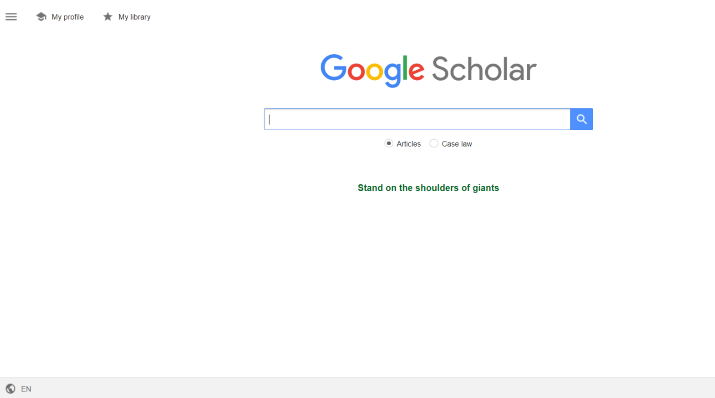
Google Scholar is a free academic search engine that makes it easy to find relevant legal research.
It contains a huge database of legal opinions and articles from a variety of sources, making it a great place to start your research.
You will find full-text state and federal court opinions, as well as articles from law journals and other legal publications without any membership subscription as with LexisNexis.
There’s an advanced search option that lets you narrow your results by date, case name, and other factors.
You can also set up email alerts to be notified when new content is published that meets your search criteria.
There is a dedicated tab that will tell you the context of the law, how it has been interpreted in different cases, and what secondary sources have to say about it.
You will see where the case you are reading has been cited by other cases, and you can use this information to find similar cases.
Citations are also linked to the full text of the case, so you can easily read the original opinion. You can also save articles, create bibliographies, and more.
With Google Scholar, you will find cases as old as 80 years for federal and 50 years for state-level.
Also Read: Best Law Firm Website Templates
2. Fastcase
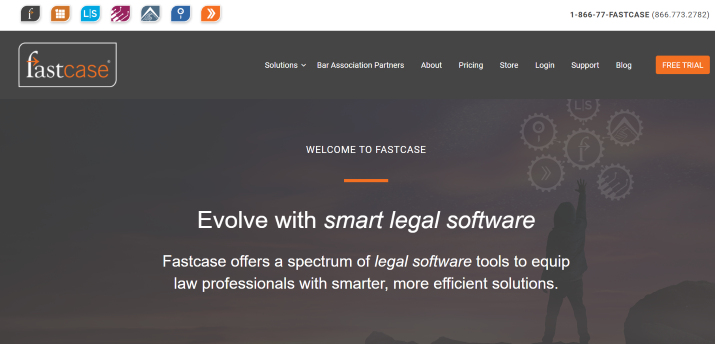
Fastcase is a legal research platform that contains a large database of cases and articles, making it a great alternative to LexisNexis.
In addition to Federal and State cases, it also includes cases on a variety of topics from over 50 countries.
You will find an extensive collection of bankruptcy cases, tax cases, and more.
The intuitive search function on the platform makes it easy to find the right information quickly and efficiently.
There’s even a newspaper search that can help you find articles from over 4,000 publications. This way, you can see how your case is being covered in the media.
Fastcase also partners with 21 state bars to offer free research to members. For non-members, you can still get access to its free app on iPad which contains a limited number of cases.
Full access to the Fastcase platform, even if you are not a member of any of the partner state bars, can be granted when you subscribe to the premium version or the appellate plan.
Also Read: Rocket Lawyer Alternatives
3. Westlaw
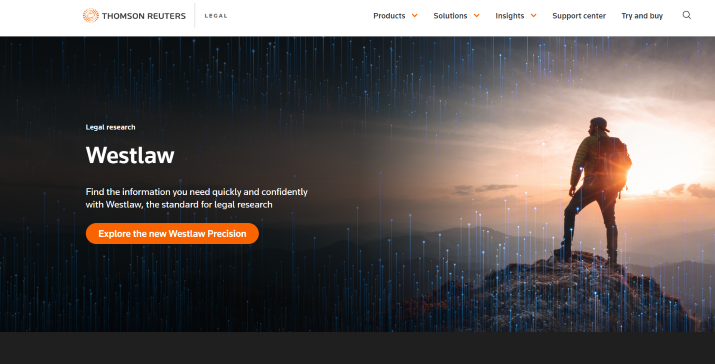
Westlaw is a legal research platform offered by Thomson Reuters. It is a paid subscription service, but it offers a free trial so you can try it out before you commit to a subscription.
The platform has a more intuitive interface than LexisNexis and it is more customizable.
Westlaw contains a large database of cases and articles, making it a great resource for legal research.
You will find one of the largest collections of legal resources including federal and state cases, statutes, regulations, secondary sources, and more.
Westlaw also has a handy KeyCite feature which allows you to quickly check the status of a case or statute.
The platform is designed to be more user-friendly and intuitive, with a cleaner interface and enhanced search functionality. It allows lawyers to provide better legal answers and deliver faster, more efficient results.
The service is powered by one of the most advanced AI search engines in the legal industry, so you can be confident you’re getting the best results.
You will also be privy to the most intelligent document analysis available and can take advantage of the platform’s predictive coding capabilities.
Westlaw Precision and AI-powered CoCounsel are some of its latest versions. It’s a great tool for keeping up with the ever-changing law.
Explore: Best Libgen Alternatives
4. FindLaw
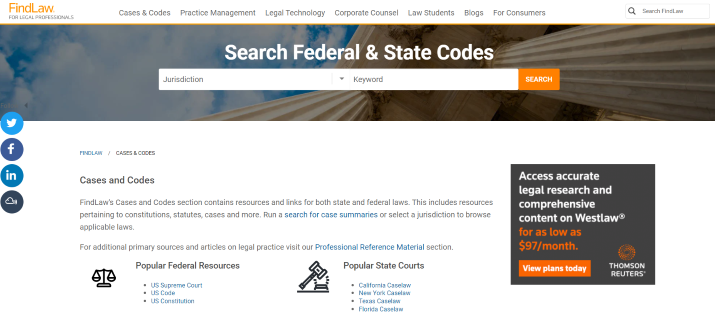
FindLaw is another legal research platform owned by Internet Brands. It was earlier a part of Thomson Reuters.
Unlike LexisNexis, it is a free service, making it a great option for those on a budget. It contains a large database of cases and articles, making it a great resource for legal research.
The platform boasts of offering one of the most comprehensive legal directories on the web. Millions of people visit the website every month to find information on various legal topics.
You will get full access to state and federal statutes, court rules, regulations, and more.
FindLaw also has a large collection of articles written by attorneys on a variety of legal topics. This makes it a great resource for those looking for answers to their legal questions.
There is also an up-to-date professional legal blog that covers a range of topics. Some of the topics include law firm management, technology in the legal industry, and marketing for law firms.
In addition, there are legal marketing resources that lawyers can use to market their firms. Small firms and solos will find the FindLaw website to be a valuable resource.
5. Bloomberg Law
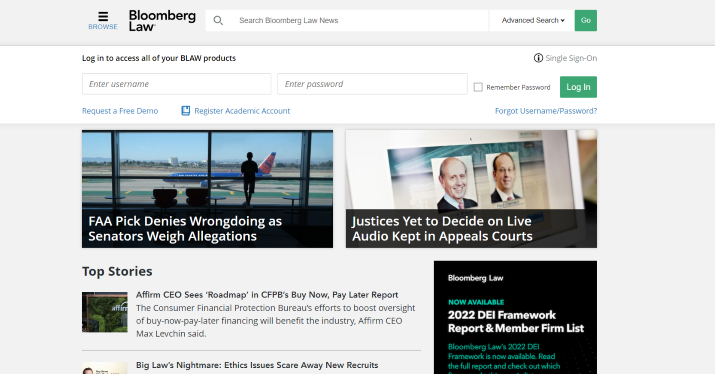
Bloomberg Law is a legal research and analysis tool that provides access to a wide range of legal information, including court opinions, legislation, news, and more.
The site offers a variety of features to help users find and use the information they need, including:
- A searchable database of millions of court opinions
- The ability to filter results by jurisdiction, court, date, and more
- The ability to set up alerts for specific topics or keywords
- A variety of ways to share information with others
- A comprehensive collection of legal news
- In-depth analysis and commentary on the latest legal developments
Also Read: Zotero vs Mendeley
6. Justia

Justia is another legal research platform that offers free access to a large database of cases and articles.
It also offers a variety of other resources, such as legal forms and a lawyer directory, making it a great all-in-one resource for legal research.
The platform also provides users with the ability to create custom alerts, so you can be notified whenever a new case is filed that meets your criteria.
Justia’s interface is fair in terms of aesthetics, but it is very functional and easy to use.
Legal resources such as Justia are vital for ensuring that everyone has access to justice, regardless of their financial situation unlike LexisNexis which can only be afforded by a few.
7. Law360
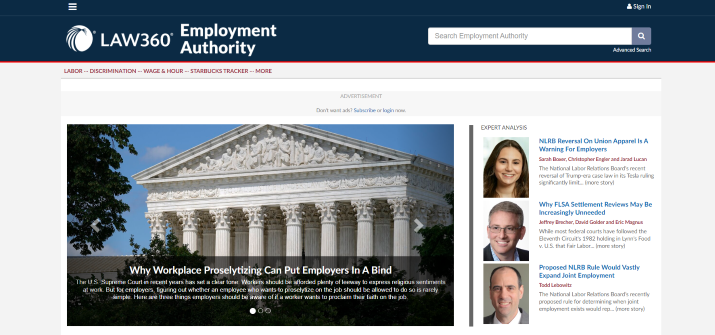
Law360 is a legal news site that offers free access to articles on a variety of legal topics. It is a great resource for keeping up with the latest legal news and developments.
The site is operated by Portfolio Media which is a subsidiary of LexisNexis. However, Law360 is a more focused legal news site than LexisNexis.
Law360 delivers articles on specific legal topics and industries. This makes it a great resource for lawyers who want to stay up-to-date on the latest developments in their practice area.
In addition, Law360 offers a variety of features that make it a more user-friendly than LexisNexis. For example, you can set up customized email alerts to receive notifications when new articles are published on topics that you are interested in.
The platform also launched a podcast (2017-2023) called the Pro Say, which was a great way to keep up with the latest legal news while you were on the go.
Given its popularity, they launched another podcast in 2019 called The Term which is still active and focuses on the U.S. Supreme Court.
Check Out: Best EndNote Alternatives
8. Free Law Project
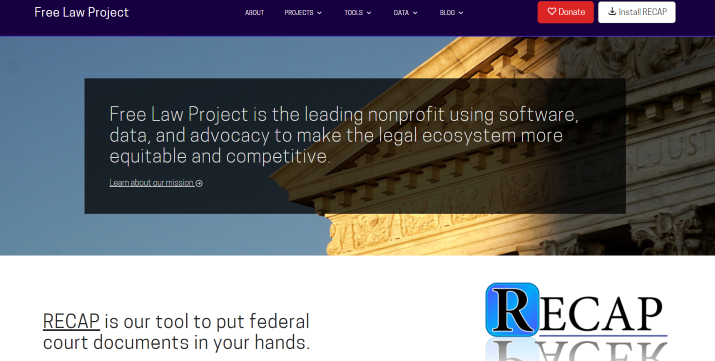
The Free Law Project is a non-profit organization that provides free access to legal research materials. It offers a variety of resources, including a database of court opinions, a legal dictionary, and a directory of lawyers.
The project was initiated in 2010 as a way to make legal research more accessible to the public. The organization has since grown to include a team of developers, designers, and researchers who work together to improve the project.
One of the goals of the Free Law Project is to make it easier for people to find and use legal information. To that end, the project provides a variety of tools and resources that are designed to be easy to use and understand.
One of the most popular features of the Free Law Project is its court opinion database. The database includes opinions from a variety of state and federal courts, as well as some international courts.
The database is updated on a daily basis, and users can search for opinions by keyword, date, court, or jurisdiction.
In addition to the court opinion database, the Free Law Project also offers a legal dictionary, a directory of lawyers, and a variety of other resources.
The Free Law Project is an excellent alternative to LexisNexis for anyone who needs access to legal research materials.
Also Read: Best EasyBib Alternatives
9. Practical Law
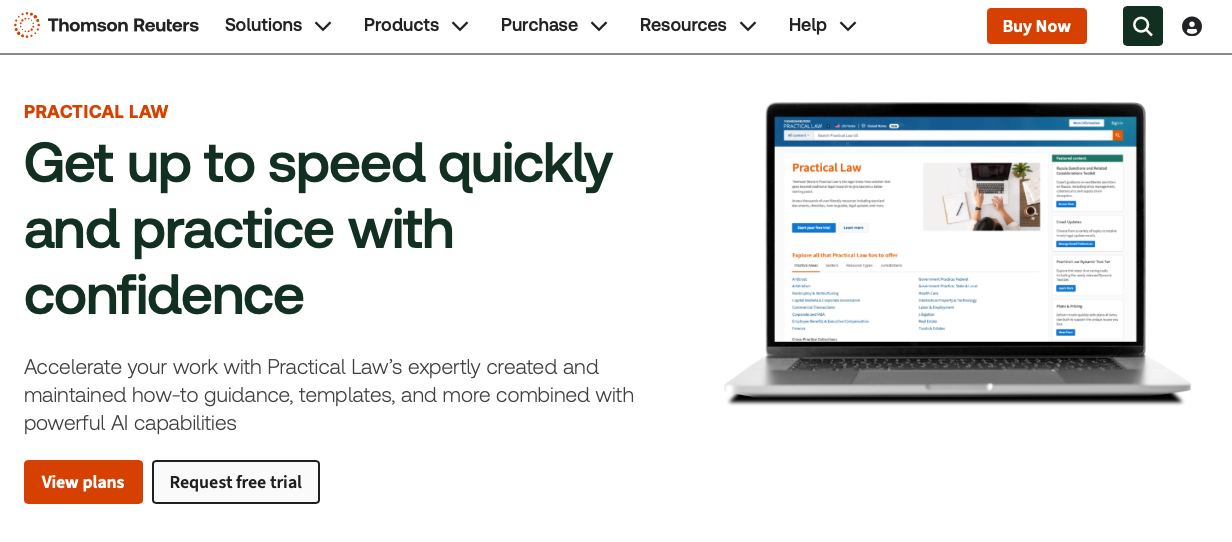
Practical Law by Thomson Reuters is a strong tool particularly for legal professionals who want practical, ready-to-use guidance rather than a research platform focused primarily on finding primary law.
It provides practice notes, standard documents, checklists, clauses, toolkits, and legal updates covering numerous practice areas and jurisdictions.
The resources are designed to help lawyers work more efficiently, draft documents, understand unfamiliar legal issues, and stay current with changes in the law.
While Practical Law is solid for practical legal work, consider one of the other platforms on the list for comprehensive legal research.
10. CourtListener
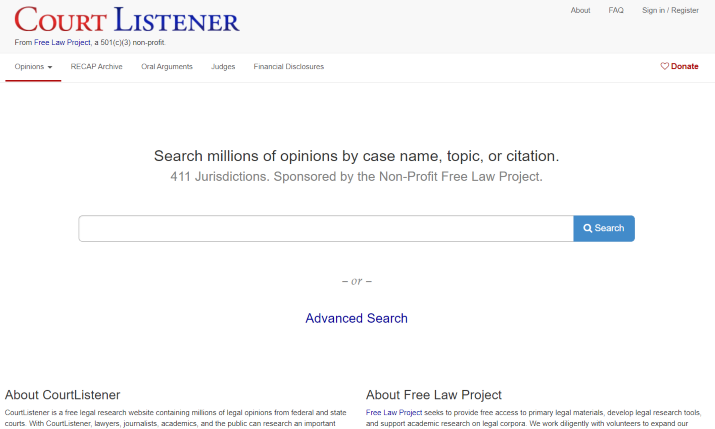
CourtListener is a free legal research website that provides access to court opinions, oral arguments, dockets, and other case-related information from a variety of federal and state courts.
The site was launched in 2011 by Michael Lissner, a former software engineer at the Electronic Frontier Foundation, with the goal of making legal research more accessible and user-friendly.
CourtListener is supported by the Free Law Project, a non-profit organization that promotes free access to legal information, unlike LexisNexis.
The site offers a range of features to help users find and use court opinions, including:
- The ability to filter results by date, court, jurisdiction, and keyword
- A citation tool that allows users to generate citations for court opinions in a variety of formats
- The ability to create and share custom collections of court opinions
- An RSS feed for each court opinion, so users can be alerted when new opinions are issued
- A mobile-friendly version of the site
11. Centellic
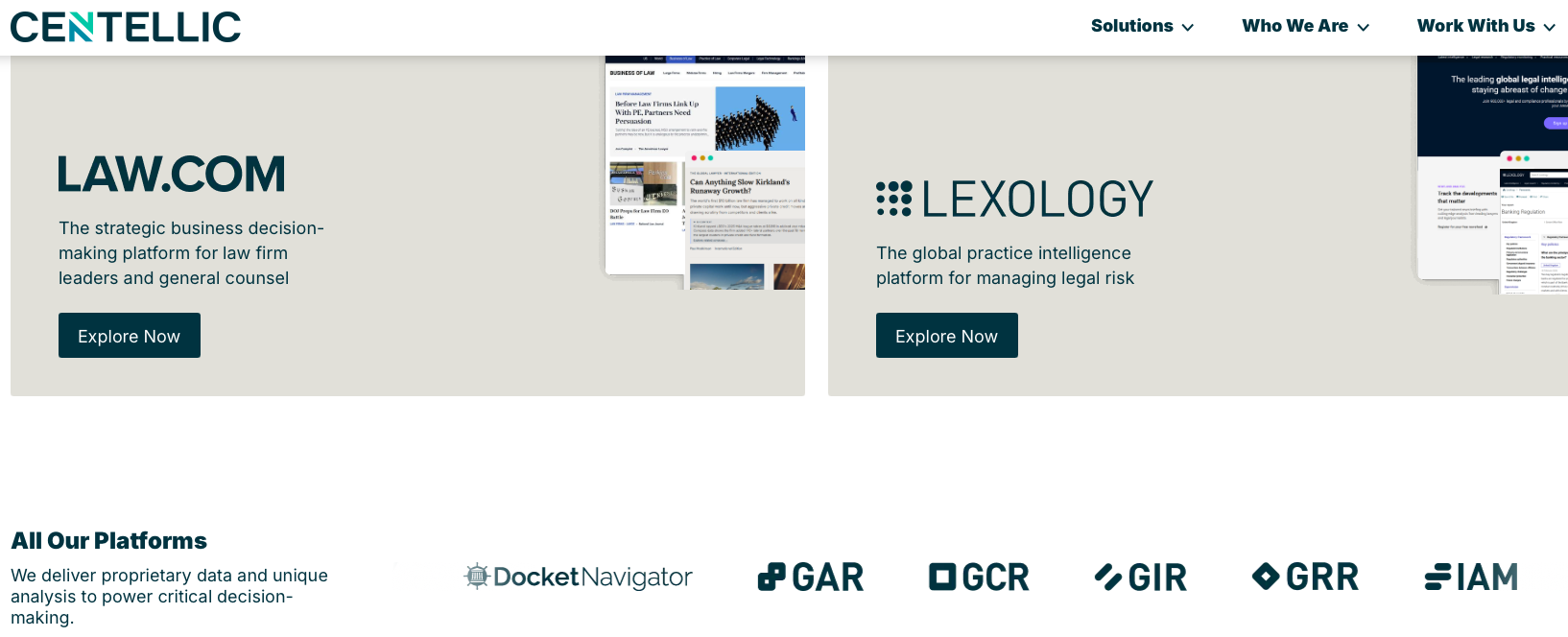
Centellic is a global intelligence and information company that provides specialized data, research, analysis, and AI-powered platforms for legal, regulatory, and business professionals.
Its portfolio includes platforms such as Lexology, Law.com, Global Investigations Review, Global Competition Review, and Docket Navigator, covering areas ranging from legal intelligence and litigation analytics to regulatory developments and industry trends.
Centellic emphasizes expert-authored content, proprietary datasets, AI-powered search, document analysis, alerts, APIs, and workflow integrations.
For specialized legal intelligence, regulatory monitoring, and market insight, it’s a solid alternative to LexisNexis.
Check Out: LegalZoom Alternatives
12. Gale
Gale offers a huge online library that provides access to more than 10 million academic books and articles, as well as primary sources, from over 3,000 publishers.
You can use Gale to research just about any topic imaginable, and the site’s powerful search engine makes finding specific information a breeze.
One of the best things about Gale is that it’s designed specifically for academic research, so you won’t have to wade through a bunch of irrelevant results when you’re searching for something specific.
And if you need help with your research, Gale offers a number of helpful tutorials and guides.
The library has an advanced search option that allows you to narrow your results by publication date, source type, and more.
You can also create custom libraries of articles, books, and other resources that you can share with others or keep private.
You will need to be subscribed to use Gale, but subscription plans are very reasonable.
If you’re looking for a comprehensive research tool that offers a ton of features and options, Gale is a great choice.
Check Out: Better Legal Review – Is It Legit?
13. HeinOnline
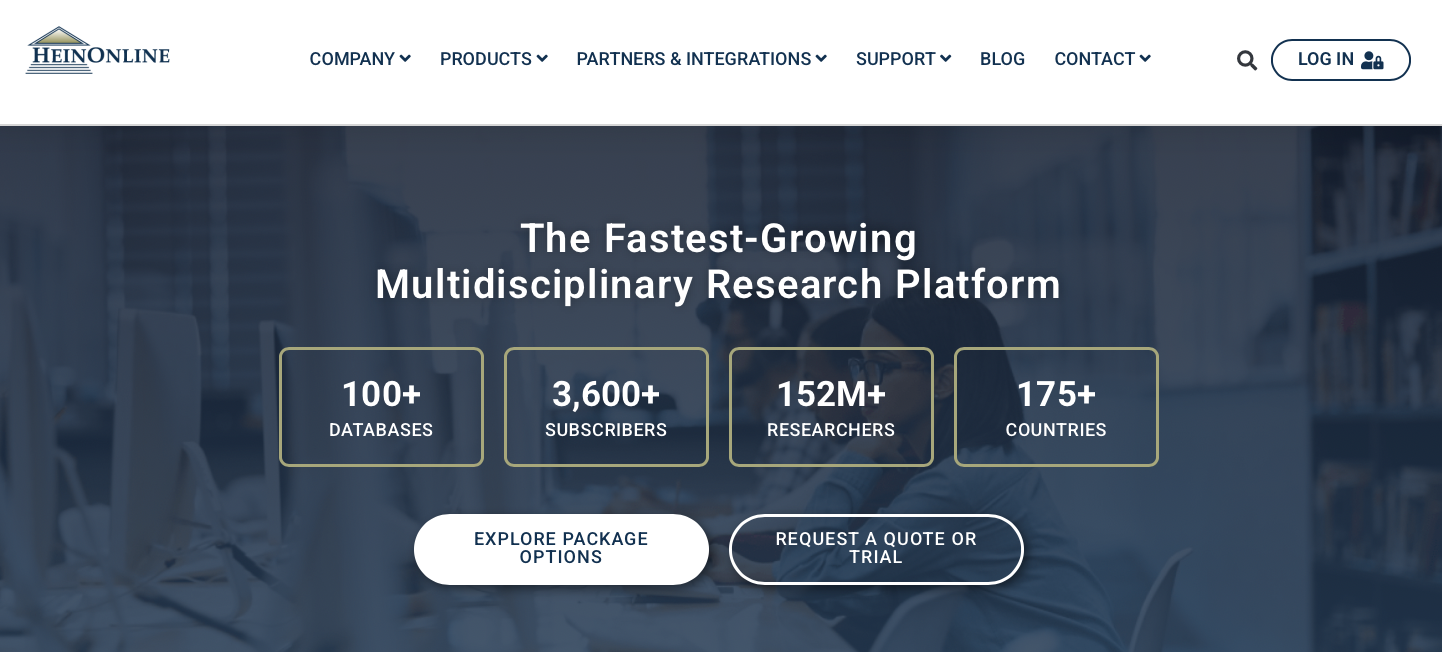
HeinOnline is a strong alternative to LexisNexis, particularly for law students, legal researchers, academics, and professionals who need extensive historical legal materials.
Its database provides access to millions of pages of scholarly articles, law journals, historical statutes, government documents, treaties, case law, and other legal resources.
One of HeinOnline’s biggest strengths is its deep collection of digitized historical materials, making it especially valuable for academic and historical legal research.
For scholarly, historical, and document-based legal research, it’s a great platform to consider in place of LexisNexis.
14. UniCourt
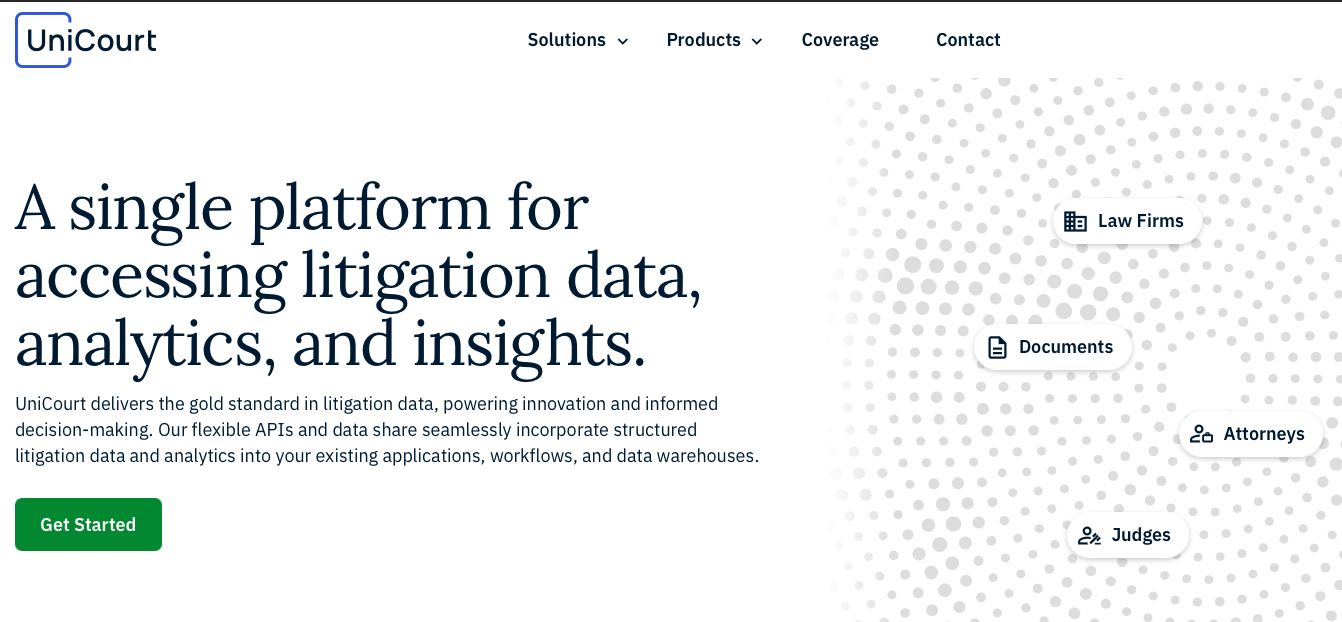
UniCourt is another good substitute to LexisNexis, for a specific part of the latter though.
It is a litigation data, docket intelligence platform which gives you normalized, structured data from 3,000+ state and federal courts across 40+ states in the US, over 1 billion dockets and documents.
The platform is especially useful for:
- Docket Research & Tracking — real-time case tracking, alerts, PACER alternative
- Judge Analytics — how a judge rules on specific motions
- Legal Analytics — litigation history of companies, parties, law firms, opposing counsel
- DEEP API — they sell their data as API for firms/insurers/legal tech partners to build on
UniCourt is not just an alternative, it’s often superior and cheaper than Lexis CourtLink. Many firms now do: Westlaw/Practical Law for research + UniCourt for dockets, and drop LexisNexis entirely.
15. vLex / FastCase
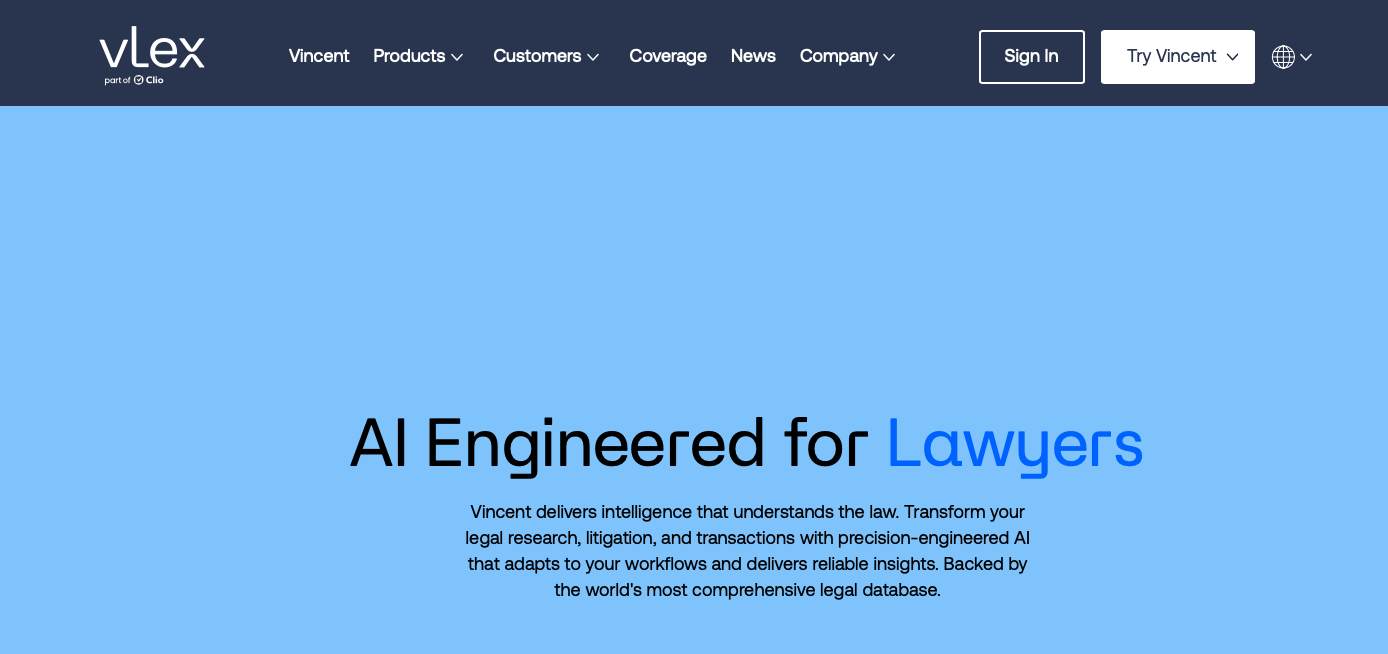
This is one of the closest alternative to LexisNexis for actual legal research.
Since the 2023 merger, vLex + Fastcase is now the world’s largest global law library and the only database comparable to Westlaw and LexisNexis.
The database market now has only three players: Westlaw, LexisNexis, and vLex/Fastcase.
- Comprehensive primary law: case law, statutes, regulations, AG opinions
- AI tools: Vincent AI, data visualization
- Much cheaper — many US bar associations give it free. As Florida Bar notes: “Many firms have found that they can eliminate their LexisNexis or Westlaw subscriptions by shifting to vLex Fastcase”
If you want to actually cancel LexisNexis for case law research, vLex Fastcase is the #1 candidate.
Final Thoughts
While there are a lot more research and legal analysis tools available on the market, the ones listed above are some of the best alternatives to LexisNexis.
As technology advances, lawyers will continue to have more and better options to choose from when it comes to research tools.
No matter what your budget is, there is a legal research platform that will meet your requirement and budget. Do some exploring and find the best tool that works for you and your team.
Enjoyed the post?