

Startpage made its name as “the world’s most private search engine” by proxying Google results without logging IP addresses and offering Anonymous View to open pages without tracking.
But private search has evolved. And users are leaving Google because of AI Overviews, forced personalization, and AI slop in results. Startpage still relies on Google’s index, is now owned by System1, a US ad-tech holding company, and was only added as a built-in Firefox option in Germany, France, and the Benelux in August 2026.
If you want true independence, zero ads, open-source control, or eco-friendly models, these are the best Startpage alternatives.
Best Startpage Alternatives
1. DuckDuckGo
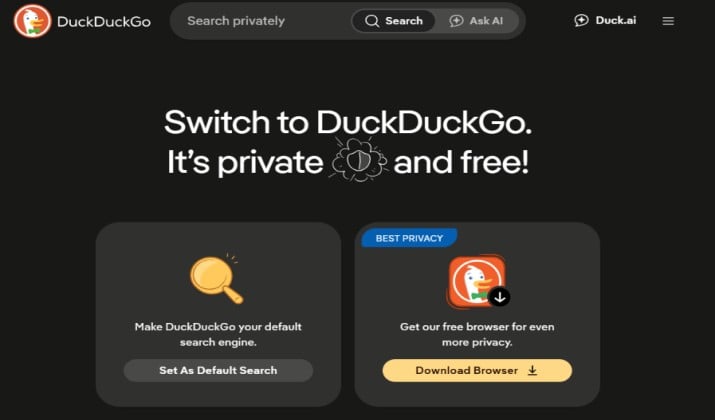
Still the #1 privacy alternative with 100M+ searches/day.
It doesn’t store or share personal info, blocks trackers, and now offers a private browser for Windows, Mac, Android and iOS with built-in ad blocking and email protection. Its optional “No AI” search mode saw 3x traffic growth after Google’s AI push in May 2026.
Results are sourced from Bing + own crawlers, with customizable Safe Search and bang shortcuts. What makes it stick is the ecosystem: DuckDuckGo Privacy Essentials extension for Chrome, Firefox, Edge and Opera, and automatic blocking of most targeted ads including YouTube ads.
It features encrypted sync of bookmarks and passwords across devices without needing an account, plus a built-in private AI assistant and password manager.
Sponsored results exist but are not based on your history, and you can block AI-generated images with one click. It’s the easiest drop-in replacement for Startpage.
2. Qwant
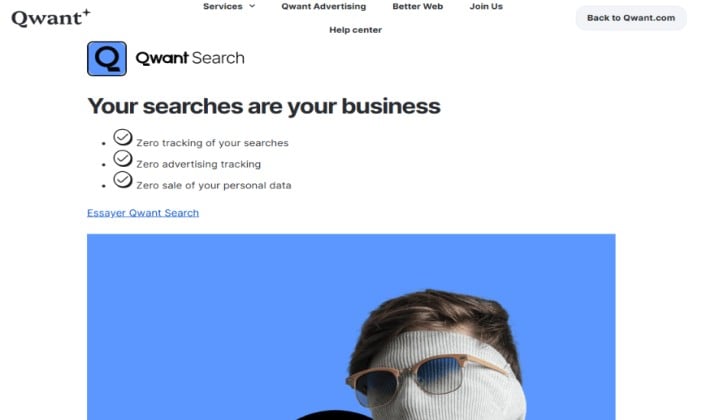
All Qwant servers are hosted in France and adhere to strict European privacy laws like GDPR.
Still has its own index and divides results into News, Social, Video. It remains one of the few European engines that says it doesn’t track user data or show behavioral ads.
Offers Qwant Junior for kids, with safety features tailored to younger users, plus a simple, fast-loading interface with mobile apps for Android and iOS and browser plugins for most major browsers.
Ads are displayed but are contextual, not based on your activity, and there is no built-in ad blocker. Perfect if you want an EU-based legal protection layer over your searches.
Read this too: Brave vs DuckDuckGo
3. Brave Search
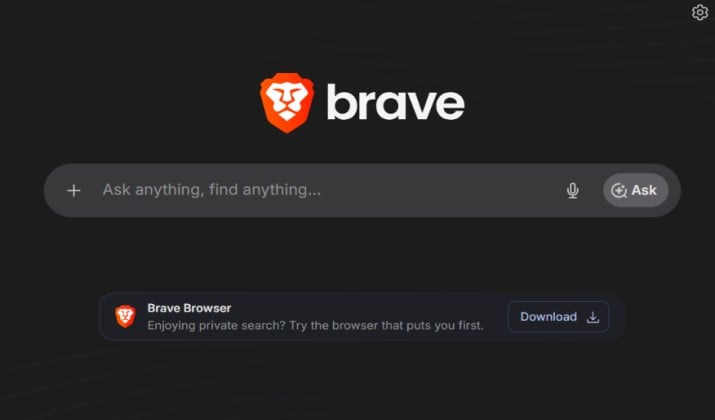
Brave runs on its own independent index, not Bing or Google, and is the default search in the Brave browser. In fact, Brave Search is now the default on all new installations of Brave desktop and mobile in US, Canada, UK, Germany and France.
Key features include:
- No tracking
- Optional Goggles to create your own ranking filters
- Built-in Leo AI that doesn’t store chats
- Optional Brave Rewards where you earn BAT tokens for viewing ads you choose to see
Unlike most private engines, Brave doesn’t rely on Bing or Google for its core results, It operates on a proprietary algorithm and shows a transparency “Search independence” percentage in settings.
You also get Brave Shields that blocks ads and trackers automatically, free video calling, and an optional paid VPN. The fastest independent private engine for users who want to de-Google completely.
4. SearXNG
SearXNG is a free, open-source metasearch engine aggregating 200+ services. It comes with features like:
- No cookies
- Encrypted connections
- Self-hosting option via Docker or accessed via public instances at searx.space
- Tor-compatible for ultra-private browsing
It doesn’t collect information about users and blocks tracking from HTTPS headers, pixels, and malicious scripts on third-party sites.
You can host it locally on your own machine so nothing ever leaves your computer, customize which 70+ engines it queries, and watch queries unfold in real-time.
The trade-off: no official browser extension and less user-friendly than DuckDuckGo. Best for maximum control and for develropers, journalists, and privacy purists.
Also read: Best Search Engines List
5. MetaGer
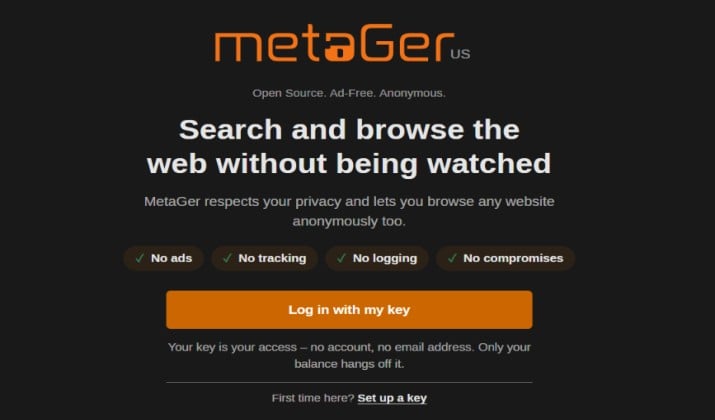
This is a German non-profit run by SUMA e.V. It aggregates around 50 engines and routes all searches through an anonymous proxy for full encryption.
All searches are encrypted and routed through an anonymous proxy tool for true privacy, and it’s completely ad-free.
It’s main features include 100% renewable energy, open-source, and no personalization. Now it requires a secure key login for extra privacy. This is a unique approach where you create a secure key to log in, so MetaGer won’t collect any of your data or activity.
It’s also compatible with Tor for extra privacy and offers plugins for iOS and Android. Owned by a registered non-profit, so there’s no shareholder pressure to monetize data, and it protects you from censorship by combining results from many sources.
MetaGer is best for users who want German privacy engineering and proxy-based anonymous viewing similar to Startpage’s Anonymous View, but with open-source transparency.
6. Swisscows
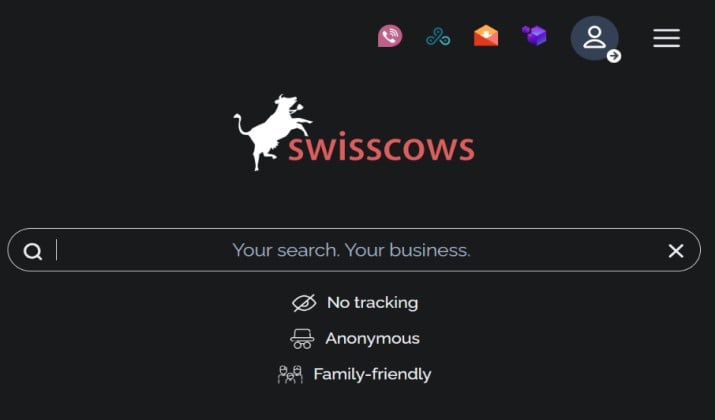
This Swiss-based search engine involves no data collection or tracking. Now it also includes AI-powered optional summaries and anonymous preview that shows a screenshot + tracker list before you click. Family-friendly filter is on by default.
Built by Hulbee AG in Switzerland, it doesn’t build tracking profiles or use unique identifiers. It’s a semantic search engine, meaning it uses AI and machine learning to evaluate context, not just keywords.
As the name implies, it’s focused on privacy AND safety. It filters out adult and explicit content by default and cannot be turned off, which makes it ideal for families and schools.
The free version shows non-targeted banner ads, while Swisscows Pro is completely ad-free and unlocks Edelcloud secure storage, Swisscows.email, TeleGuard encrypted messenger, and Swisscows VPN.
It also has a unique music search where you can play songs right from the results page. You can set it as default in any browser.
Another interesting read: Best TinEye Alternatives
7. Mojeek
This is a UK-based, fully independent crawler with 6B+ pages indexed from scratch, not aggregated from Google or Bing.
It was one of only three truly independent indexes this year alongside Brave and Kagi, praised by SafetyDetectives and CyberInsider for resisting censorship and bias.
Mojeek involves no tracking, cookies, or ads, making it a completely ad-free search experience. It is UK GDPR compliant with servers powered by renewable energy, and offers creative extras like Focus dashboard for building your own custom search filters and emotion-based search where you can search by how you want to feel.
Results can be less accurate than Google for super niche queries due to smaller index, but it’s the purest alternative if you want zero corporate influence.
8. Kagi
Kagi is a real premium Startpage alternative that is ad-free, and combines its own crawl plus aggregation from multiple upstream engines including Google and Brave.
It involves no tracking, ads, or selling of data. Kagi icludes FastGPT AI assistant, Universal Summarizer, and Lenses — custom filters you can create to search only your favorite sites.
It is considered best for power users who want quality over free, with features like result blocking, prioritizing, and personalized ranking without profiling.
Explore: Is Brave Browser Safe & Secure?
9. Ecosia
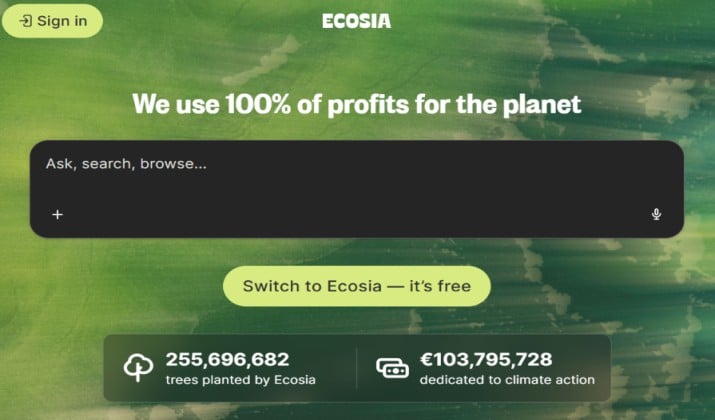
This is a Berlin-based B Corp that plants trees with ad revenue. They report over 118 million trees funded by 15M active users. Ecosia is known for features such as:
- Encrypted searches
- Anonymizes within one week
- No sale of data
- No external trackers
Unlike most privacy engines, Ecosia is transparent about finances. It publishes monthly reports on how ad money is spent on tree planting.
It does collect IP addresses temporarily and uses cookies, but you can opt out of personalization and it never creates user profiles for third-party ad targeting.
Now integrated as a secondary search option in Brave browser for 24M+ users and a default option in several browsers, Ecosia offers its own browser app for Windows, iOS and Android.
Its AI features run on small, low-energy models powered by renewable energy. It’s best if you want privacy PLUS climate impact. Each search literally funds reforestation.
10. Presearch
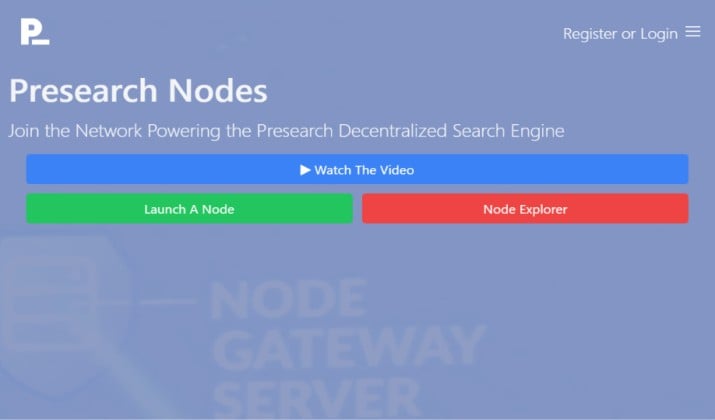
This is a decentralized, blockchain-powered engine that doesn’t censor. It runs on community Nodes (Docker-based), and rewards users with PRE tokens for searching and for running nodes.
Presearch harnesses the power of several top search engines and other data sources to give compelling results while working more like a public utility than a shareholder company.
It emphasizes active personalization. You control your experience instead of automated profiling and gives you more search choices on the results page.
With Presearch Nodes you can help power the network and earn crypto, making it censorship-resistant and community-owned.
It’s still in active development, so results can be less consistent than Brave or DuckDuckGo, but it’s a strong pick if you want to support a decentralized web alternative to Big Tech search.
11. You.com

Although still in beta, this has grown into an AI-first customizable search.
Thanks to the split-screen results, you can rearrange, and add apps like GitHub, Reddit directly to dashboard. First-party cookies are only for personalization, which you can disable with private mode/VPN. No data is sold to advertisers.
What sets You.com apart is YouPro, its AI assistant layer that combines web search, writing, and coding tools in one chat interface. You can add developer apps, save custom “YouApps” to your dashboard, and choose between AI models for answers.
Search results appear on one page split into different sections like Web, Images, Social, News, which you can drag-and-drop to prioritize what you see first.
It stores first-party cookies for personalization, but you can browse in private mode or via VPN to eliminate them entirely. It is best for developers, students, and AI-heavy users who want privacy with deep customization.
12. Gibiru
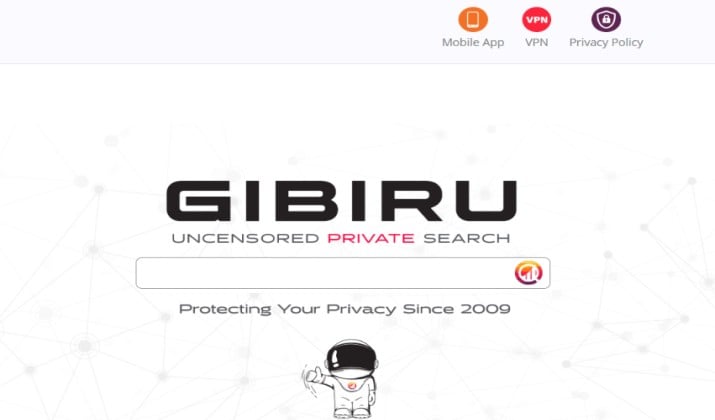
Gibiru offers uncensored private search using a modified Google algorithm with 256-bit AES encryption to fetch results. There are no cookies or IP logging. It erases records within seconds of the search being performed, and searches are fully encrypted.
Results are split into two columns: “All Results” and “Censored Content”. Gibiru’s index surfaces links excluded from curated feeds of major engines like Google, making it popular for uncensored research.
It doesn’t track users or store personal data, and makes money only through commission on ad referrals, not targeted ads. It has Wormhole mobile app for Android and iOS for anonymous browsing.
Note: Gibiru has a smaller, opaque team with little public info about operators. The site has a basic design with black and red wormhole theme, and occasional 403 errors are reported. Use it when you specifically want results Google filters out, but pair it with a more stable daily engine.
13. Disconnect Search
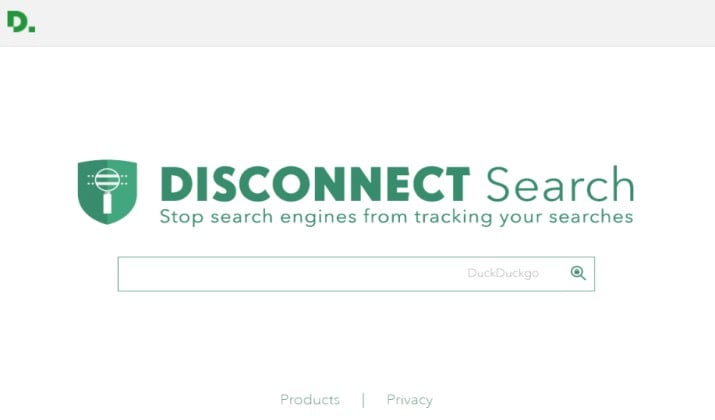
This search engine routes queries through Disconnect’s servers so they appear as coming from Disconnect, not you, strips keyword metadata and encrypts queries. It lets you choose source engine (Google, Bing, Yahoo, DuckDuckGo).
Originally launched to let you use your favorite search engine without privacy issues, it works as a proxy layer. You type on Google, but Google only sees Disconnect.
It encrypts all traffic so ISPs can’t snoop, and it prevents search engines from passing your keywords to sites you visit via results.
The search page is more visually appealing than most private engines, displaying results in the style of the engine they come from, and you can get local results by installing the Disconnect browser extension for Chrome, Firefox and Safari.
Also offers a premium Disconnect VPN and private browser. Best as a lightweight privacy add-on if you don’t want to fully leave Google/Bing but want to anonymize the request.
14. Yandex
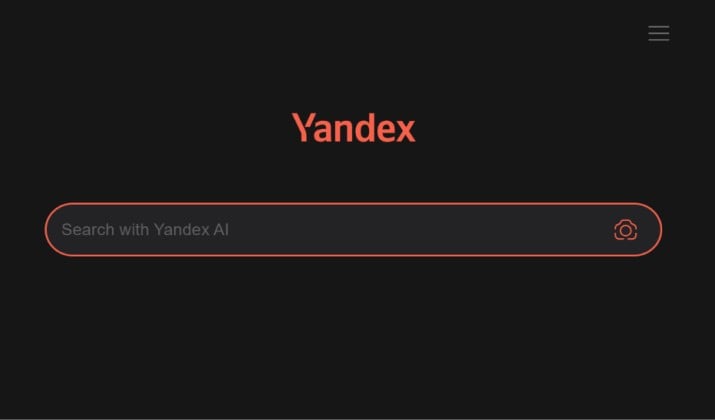
This option is here for result quality, not privacy. It’s a Russian engine with own index. It does not rely on links, instead uses keyword ranking and user experience signals. Yandex offers cloud storage, maps, email, music, videos, live traffic maps, and free email.
It is Russia’s largest search engine and one of few that truly built its own web-scale index and browser outside Big Tech. Its cloud integration lets you find your own files in search if you use Yandex.Disk, and its algorithms are strong for images, video, and non-English queries.
However, privacy is not its selling point. It collects personal data for personalized services and targeted ads, is subject to Russian data laws, and its homepage is cluttered with news and services.
Include it only if you need non-Western coverage, strong multimedia search, or as a research supplement.
What Is The Best Startpage Alternative?
The best Startpage alternative is DuckDuckGo. It provides a wide spectrum of instant answers to your search queries. It also has a simple, user-friendly, and customizable user interface.
Just like Startpage, DuckDuckGo does not collect any of your data and information. As a result, it gives you private and clean search results without tracking your IP address.
I highly recommend using DuckDuck over any other Startpage alternatives for these and many more reasons. In the long run, it is up to you to decide whether one search engine is more beneficial for your needs than the other.
Enjoyed the post?




![Author Website Examples [Including Unpublished Author Examples]](https://rigorousthemes.com/blog/wp-content/uploads/2023/06/Author-Website-Examples-Including-Unpublished-Author-Examples-768x402.png)

