
If you miss the old Twitter days, you are not alone. You want a place where you can post fast, find interesting people, and actually control what you see.
That search brings you to two names again and again: Bluesky and Mastodon. Both are open-source social media platforms that promise decentralized social media with no ads. And both are often called the best Twitter alternatives. But they feel very different when you use them.
So let’s settle the Bluesky vs Mastodon debate in plain language. You will see how they work, how they feel, and which one makes sense for you.
Quick Comparison
Before we evaluate the two on various parameters in detail, here’s a quick snapshot of how they fare.
|
Feature |
Bluesky Social Network |
Mastodon Social Network |
|---|---|---|
|
Protocol |
Bluesky AT Protocol, focused on portable identity |
Mastodon ActivityPub network, focused on federation |
|
Joining Process |
One app, quick sign up, no server choice needed |
Choose from Mastodon instance directory, then sign up |
|
Feed Type |
Following (chronological) plus Discover and Bluesky custom feeds you choose |
Mastodon chronological timeline: Home, Local, Federated, all in order |
|
Algorithm |
You choose, stack, and create feeds |
No algorithm in main app, you see posts as they come |
|
Identity |
Bluesky decentralized identity, handle can be Bluesky custom domain |
Handle includes your instance, example you@instance.social |
|
Portability |
Bluesky account portability keeps posts and follows |
Mastodon server migration moves followers, posts stay behind |
|
Moderation |
Bluesky content moderation plus user-chosen labelers |
Mastodon server moderation, each instance sets its own rules |
|
Key Features |
Bluesky reposts and likes, starter packs, custom moderation lists |
Mastodon polls and boosts, Mastodon content warnings, edit posts |
|
Monetization |
Decentralized social media with no ads |
Decentralized social media with no ads |
|
Best For |
People who want ease plus control |
People who want independent servers and strong community rules |
What Is the Main Difference Between Bluesky and Mastodon?
Here is the short version.
Bluesky social network gives you one app, one global feed, and a lot of freedom to shape what you see. You join quickly, you pick your username, and you can even verify it with your own domain. Your identity stays with you even if you change servers.
Mastodon social network gives you thousands of independent servers called instances. You pick a community to join, and that community sets its own rules. Your timeline stays chronological, and you get powerful tools like polls, content warnings, and boosts.
Think of it like this. Bluesky feels like one big city with custom neighborhoods you can subscribe to. Mastodon feels like a network of small towns that all connect to each other.
That difference comes from the tech underneath.
AT Protocol vs ActivityPub
If you want to understand which is better for long term control, you need to understand the protocols.
Bluesky AT Protocol
Bluesky runs on the Bluesky AT Protocol. AT stands for Authenticated Transfer.
With AT Protocol, your identity is separate from the app that hosts your posts. You get a decentralized identity that lives beyond a single server. That is why Bluesky account portability works.
You can move your account to a different host and keep your followers, your posts, and your handle.
Bluesky also gives you Bluesky custom domain verification. You can set your handle as @yourdomain.com. It proves you are you without paying for a badge.
Also read: Best Decentralized Social Media Apps
Mastodon ActivityPub
Mastodon runs on Mastodon ActivityPub network. ActivityPub is the protocol that powers the Fediverse.
Mastodon federation means independent servers talk to each other. When you post from your Mastodon instance, people on other instances can still follow you, reply, and boost you.
This is how the Fediverse social network comparison always puts Mastodon at the center. It connects to many Mastodon-compatible Fediverse apps like Pixelfed, PeerTube, and Lemmy.
So is Mastodon more decentralized than Bluesky? Yes, in structure.
Mastodon has thousands of truly independent servers run by different people. Bluesky is decentralized in design but most people still use the main Bluesky server today.
If you want pure distribution of power, Mastodon wins. If you want portable identity that you can take anywhere, Bluesky wins.
Ease of Use: Which Is Easier for Beginners, Bluesky or Mastodon?
If you want easy, Bluesky wins.
You download the Bluesky app, make an account, and start scrolling. It feels familiar if you have used Twitter. You get a global feed, search, notifications, all in one place.
Mastodon asks you to make one extra decision at the start: which server do you want to join?
You browse the Mastodon instance directory and pick something like mastodon.social, or techhub.social, or a community for artists or journalists.
That choice gives you Mastodon instances and communities that match your interests, but it can feel confusing the first time.
Here is what new users usually notice:
- On Bluesky, onboarding takes two minutes. You join and you see people right away.
- On Mastodon, onboarding takes a bit longer. You pick an instance, you learn about local vs federated timelines, and you figure out where conversations live.
If you want the simplest Twitter-like replacement with no learning curve, choose Bluesky.
Read this too: Best Bluesky Alternatives
Feeds and Algorithms
This is where your daily experience really splits.
Bluesky Custom Algorithmic Feeds and Bluesky Algorithm Choice
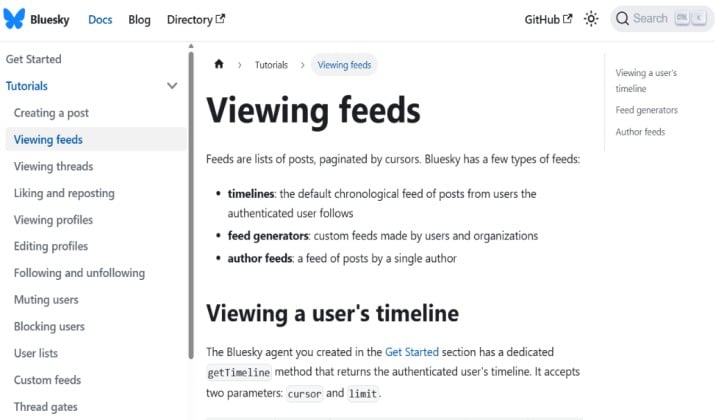
Bluesky gives you a social media platform with user-controlled algorithms. By default you get Following and Discover feeds. Both can be chronological. Then you can add more.
Custom feeds are one of its best features of Bluesky. Anyone can make a feed. You can subscribe to feeds like Cat Pics, News, Science, or Quiet Posters. One can even pin their favorites. You also control how much you see with Bluesky reposts and likes filters, mute words, and moderation lists you choose.
Does Bluesky have chronological feeds? Yes. Your Following feed shows posts in order. You can keep it pure chronological if you want.
Mastodon Chronological Timeline and No Algorithm
Mastodon takes the opposite approach. The Mastodon chronological timeline shows posts in order, with no algorithmic sorting. No one boosts a post because an algorithm decided it should go viral.
Does Mastodon have algorithmic feeds? Not in the official app. You see Home, Local, and Federated timelines, all chronological. Some third party apps add suggestions, but the core promise is no algorithmic manipulation.
Mastodon polls and boosts and Mastodon content warnings also shape your feed. You can add a content warning to hide sensitive posts behind a click. Plus, you can run polls with up to four options. You boost instead of reposting.
If you love tinkering and curating your experience, Bluesky custom algorithmic feeds give you more toys. If you want calm, time-ordered scrolling with no ads and no manipulation, you will love Mastodon.
Another interesting read: Misskey vs Mastodon
Communities and Discoverability
This is a core part of the Mastodon vs Bluesky comparison.
Mastodon independent servers create built-in communities. When you join an art instance, your Local feed fills with artists. When you join a journalism instance, you find reporters. Moderators know their community. That creates strong, topic-focused spaces.
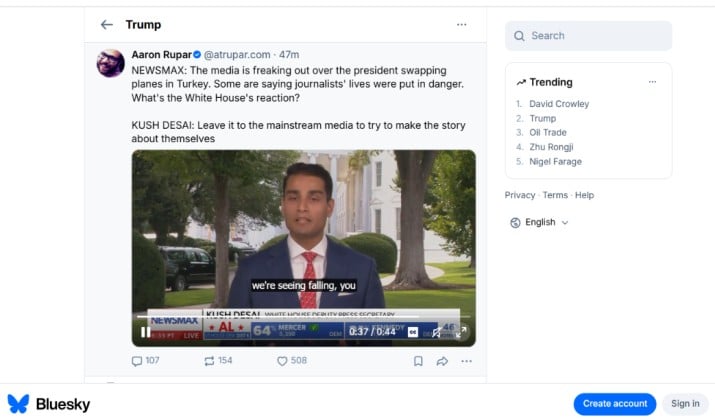
Bluesky does communities differently. It has one big network, but you find your people through custom feeds and starter packs. Starter packs are curated lists of accounts you can follow with one tap. Discovery is fast.
Which platform has better custom feeds? Bluesky does.
Which platform has better built-in, moderated communities from day one? Mastodon does.
If you compare Bluesky and Pixelfed comparison or Bluesky and Threads comparison, you see the same pattern. Bluesky is more like Threads in its unified feel. Mastodon is more like a collection of forums that can talk to each other.
Moderation and Privacy
Both platforms care about moderation, but they do it differently.
Bluesky Content Moderation
Bluesky content moderation uses a layered model. It has central rules, plus you add your own moderation services and labelers. You can subscribe to a labeler that hides spam, adult content, or AI images. You stay in control.
The app also gives you Bluesky decentralized identity and Bluesky custom domain verification, which helps with impersonation.
Mastodon Server & Community Moderation
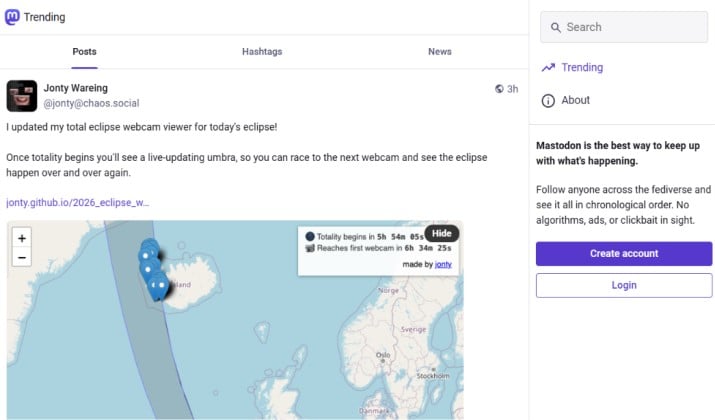
Mastodon server moderation means each instance sets its own rules and enforces them. One instance might allow anything legal. Another might ban political ads or require content warnings for everything. You pick the rules you want to live with.
That makes Mastodon community moderation feel more hands-on. Admins often know their users.
Now for privacy.
Bluesky vs Mastodon privacy is nuanced. Both are decentralized social media with no ads and both avoid the surveillance ad model. But:
- On Bluesky, posts are public by default and currently searchable.
- On Mastodon, you can make your account more private, you get more granular settings per post, and your data lives on your chosen server, not on one big company server.
Many people see Mastodon open-source social network as the best social network for privacy and user control because you can even host your own server.
If you want user-controlled safety tools you can stack, Bluesky feels modern. If you want community-run rules and data that lives on independent servers, Mastodon feels safer.
Can I Move My Account? Bluesky Account Portability vs Mastodon Server Migration
Is Bluesky account identity portable? Yes. With Bluesky AT Protocol, your identity is portable. If you switch hosting providers, you keep your handle and your social graph.
Can I move my Mastodon account to another server? Yes. Mastodon server migration lets you move to a different instance and bring your followers with you. Your old posts stay on the old instance, and you redirect people to your new address. It works, but it takes a few steps.
Both give you more control than traditional platforms.
Can Bluesky Users Interact With Mastodon Users?
Not directly. Bluesky and Mastodon do not natively talk to each other right now because AT Protocol and ActivityPub are different. You need a bridge service if you want cross-posting.
But within the Fediverse, Mastodon works with many apps. If you ask Is Mastodon part of the Fediverse, the answer is yes. It is the biggest part of it. That is why people looking for Fediverse alternatives to Bluesky usually land on Mastodon, and people looking for AT Protocol alternatives often check Bluesky.
Both apps are free to use. No ads. No subscription needed to post.
Get Bluesky here: Official Site | App Store | Play Store
Get Mastodon here: Official Site | App Store | Play Store
For both, you might have to pay if you decide to host your own server or buy a custom domain for verification, but using the main apps costs nothing.
Why Bluesky Wins for Most People Right Now?
If you want a quick, easy place to start, pick Bluesky.
You get what you liked about old Twitter, plus what you actually want now:
- No ads
- Open source
- Search that works
- Custom feeds you control
- Starter packs that help you find your people fast
- Custom domain verification so you can prove your handle is really you
Mastodon is still excellent for privacy and tight-knit communities. If you want independent servers, strong instance rules, and full control by hosting your own server, you will feel at home there.
But if you just want to post, read, and grow without choosing a server first, Bluesky removes the friction. You get a social media platform with user-controlled algorithms that feels familiar on day one.
Start on Bluesky. Add a Mastodon instance later for your niche. You will quickly know which one you open more.